Figure Drawing Terms and Favorite Sketches

When people talk about drawing from a model, certain terms are used. The term life model basically means an unclothed model. When the term costumed model is used, it generally means a portrait session and the model is clothed. It does not necessarily mean the model is in a costume in the usual sense of the word, but they could be if there is a theme to the drawing session. Recently my friend Alice asked me about these terms. I don’t know if they continue to use them in art school and I don’t often hear younger people using the term life model. But it got me thinking about where the term came from. Well, I was not able to find out much but here is my best guess. In the not so distant past in art school, new students were not allowed to draw from a live model until they mastered drawing from plaster casts of figures, torsos, and body parts. So I am thinking that to differentiate what the subject was, the term life was applied to when a student drew from a living breathing person. If anyone knows more about this, please comment so we can all learn.

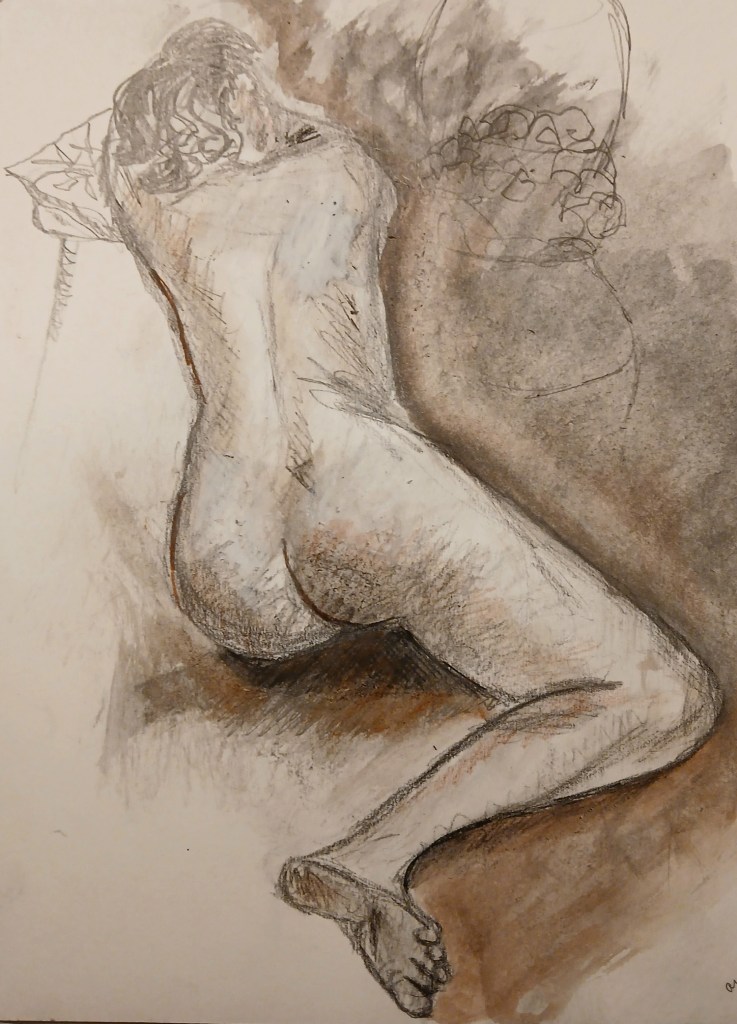
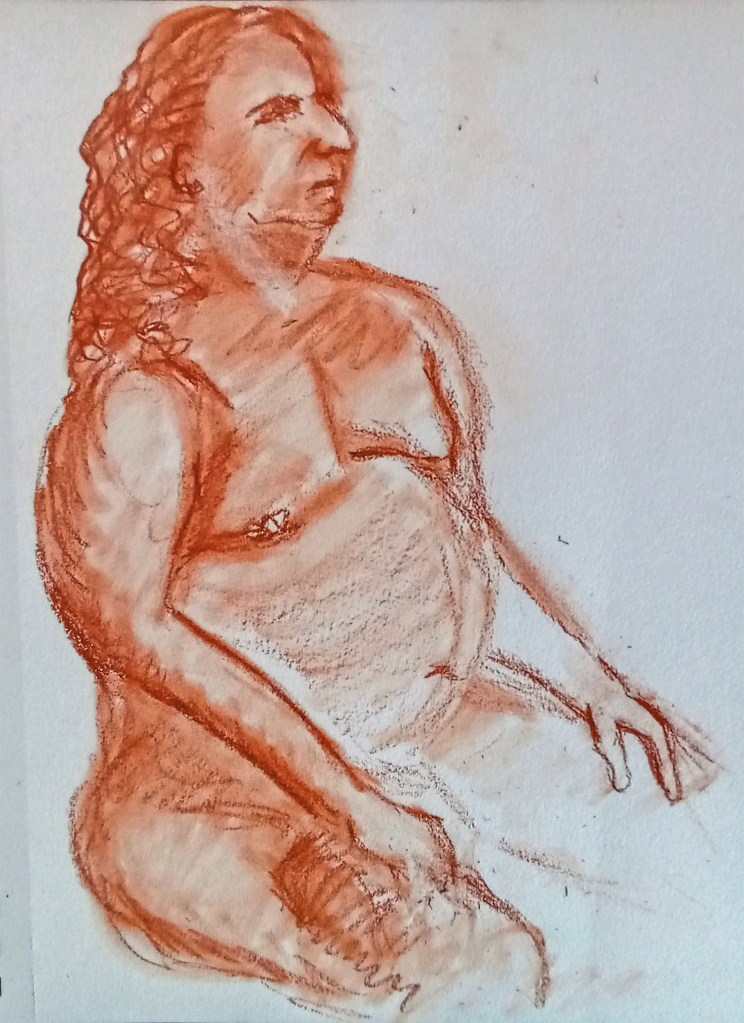
Below are a few drawings I made lately that I particularly like, mostly from life models. The sessions range from 5 to 20 minutes. I will write a few words as to what I like about the drawing.

With the above drawing, I was pleased with how the extended leg and foot came out as well as how the elongation of the torso was captured.

The above sketch was done on brown craft paper which always gives a nice warm look to drawings. I think my favorite part of this drawing is the hair and earing because it is only suggested. I also like the way the model was posed.

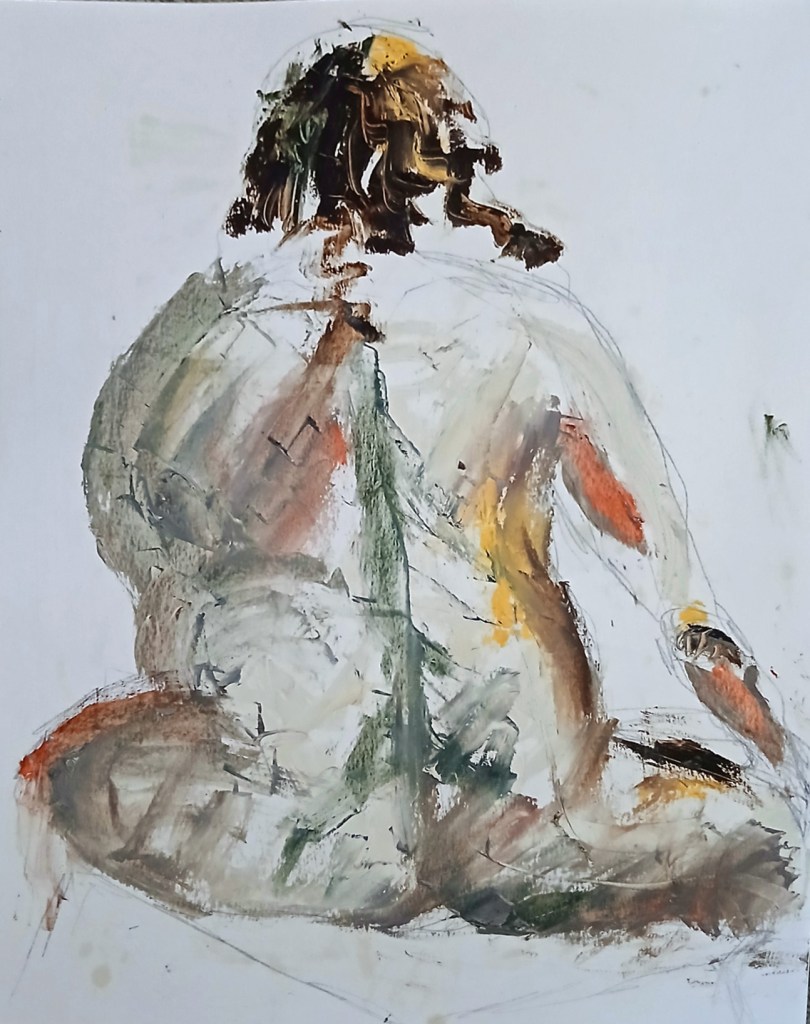
The above piece is done with oil sticks. You are almost forced to draw loosely as these are very large and detail is impossible. I like the sparse use of color and how the white areas balance out the color.

I have spent lots of time lately working on hands and feet so I just sort of liked the way I tried the hand a few different ways as well as the position of the arm which was resting on the back of the chair. It was difficult to get it to look like the arm was not coming out of his chest and you can see by the multiple erased marks I was wrestling with this.

This was a fun pose because of the way her hands overlapped. I like the different line weights (thick, thin) and she sort of looks like a mermaid to me. This is done with Conte Crayon so it is very smeary by nature. Conte crayon is a dry hard pastel like drawing medium.

I like the combination of line and wash in this and the way the resting arm is foreshortened.

Exploring White Line Woodblock Printing Techniques

White line woodblock printing is a fun alternative to the traditional woodblock print. In traditional woodcut, the shapes are often emphasized with dark contour lines but with this method of woodblock printing, the contour lines are white. The white line technique originated in Provincetown, MA in the early 20th century. You can read about the history of the technique here.

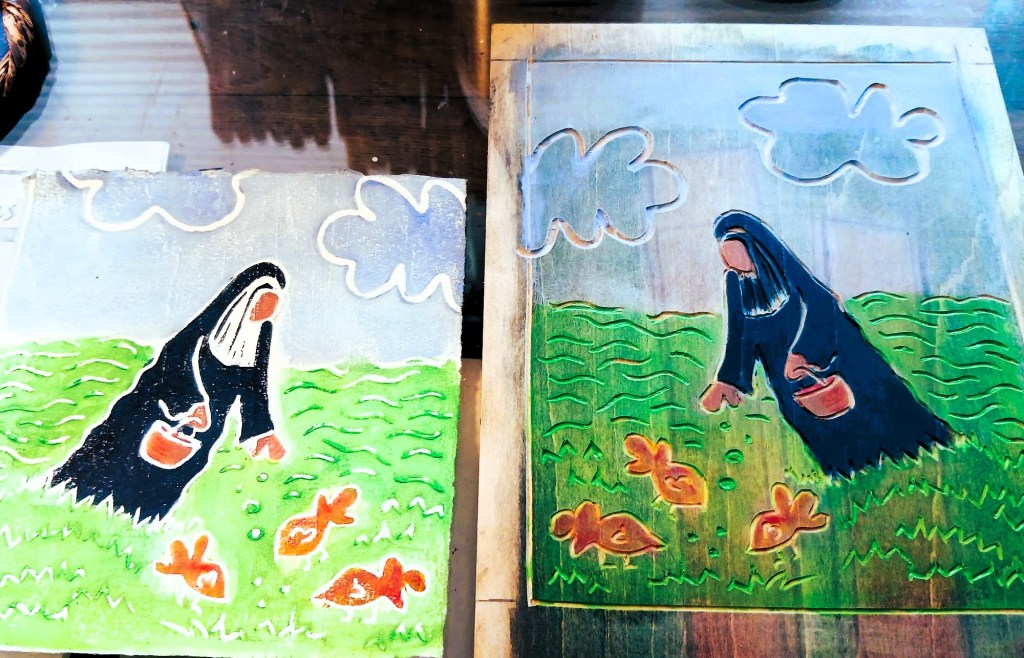
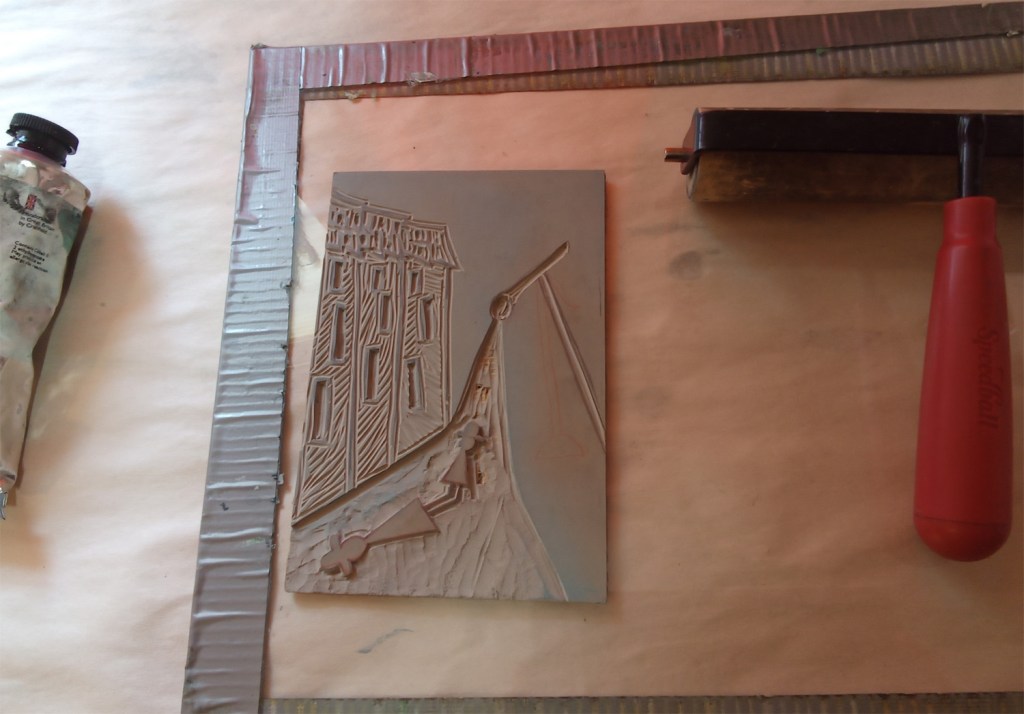
Above is the block I carved. This photo was taken after the block was printed, so it shows the contrast of the contour lines better. Since the block originally is the color of raw wood, the contrast of the carved line from the rest of the block would not show as well.

About three years ago, I took an on-line workshop in this technique through the Smithsonian Associates. The course was taught by Sue Fierston. Though there are several people online that demonstrate this technique, Sue’s approach includes a helpful addition which I will explain.

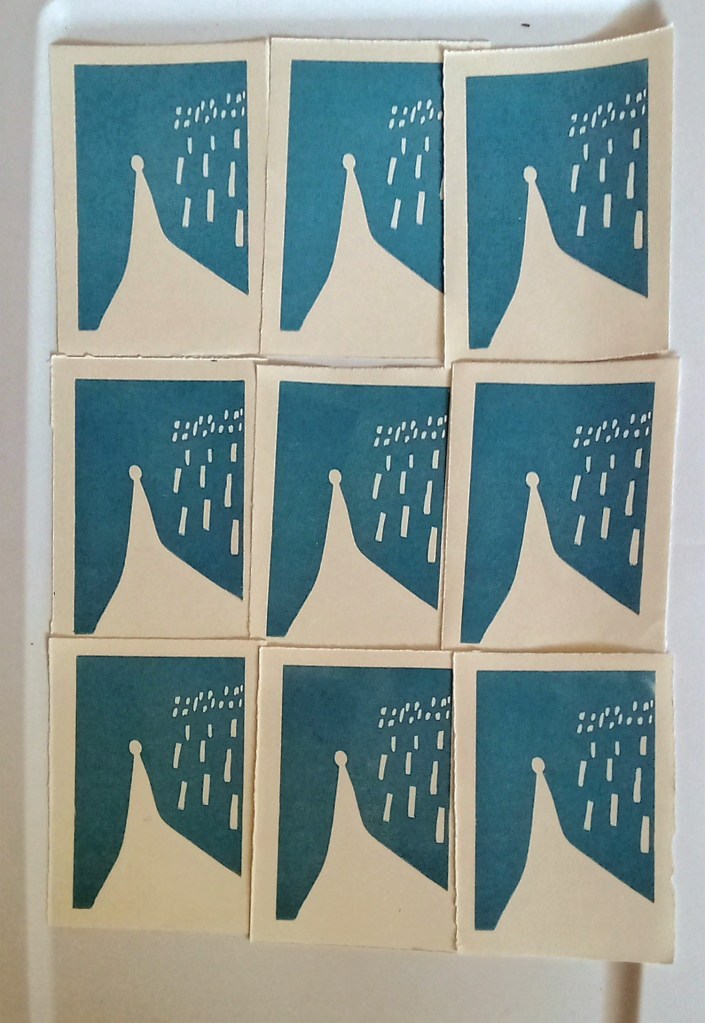
The image above shows how color is applies for this method. Instead of printing inks, watercolors are used. Watercolor (and often sumi ink) are traditional in woodblock printing in the Eastern tradition where as Western woodblock printing uses relief printing ink. Sue suggested coating a light mist of water and brushing a small amount of rice paste onto the block before applying the pigment the first time. This helps the pigment release better and also adds richness to the color. These prints are a little more labor intensive than traditional one color woodblock printing in that you have to work quickly so the pigment does not dry on the block. Also, the pigment has to be applied a few times to build up color; however, the addition of the rice paste, decreases the amount of times you have to apply pigment. Above is the results of my print after a few applications of color.
The print below is an example that did not turn out well because the paper (Rives Heavy sheet) is too textured which made it difficult to get a smooth coating of pigment.

But below is a fairly successful attempt so this is my first decent ‘proof’. Notice that only part of the sky is printed. I used a small sheet of a different paper (Rives light sheet) to see how this paper worked. I feel this is a much better paper for this technique. The print is on the left and the block is on the right.

Other papers suitable for woodblock printing (in general) are various Eastern (a.k.a. ‘rice’) papers like mulberry or masa. I will also give this a try on some mulberry paper to see how that turns out.

Pop Up Art Show from Figure Drawing Workshop

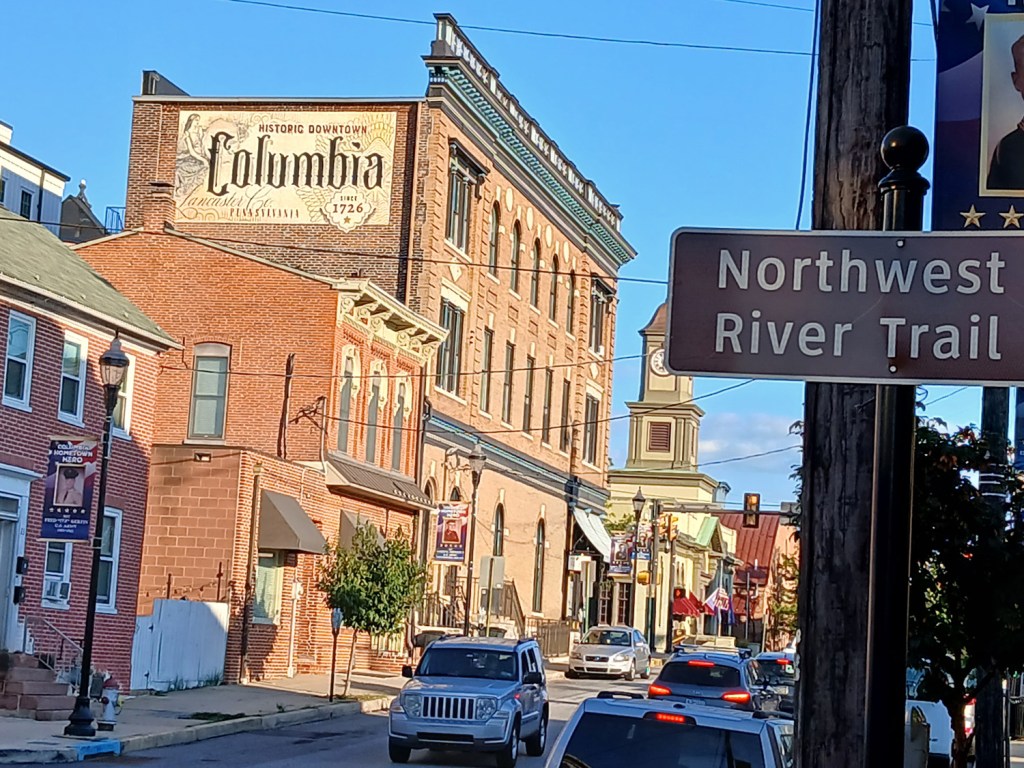
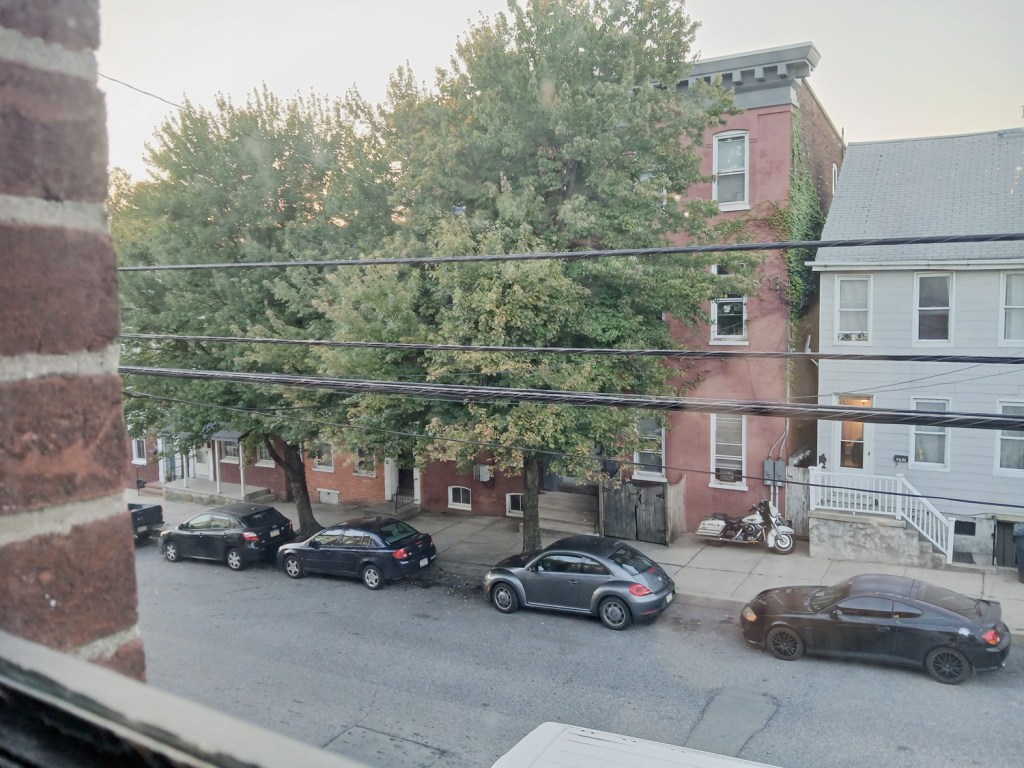
A few times a month I attend a figure drawing workshop in Columbia, PA. Columbia is one of Pennsylvania’s river towns and it also has a slightly industrial feel. Above (left) is the center of town and to the right is the view from the window of our workshop which is on the second floor of a local bar.

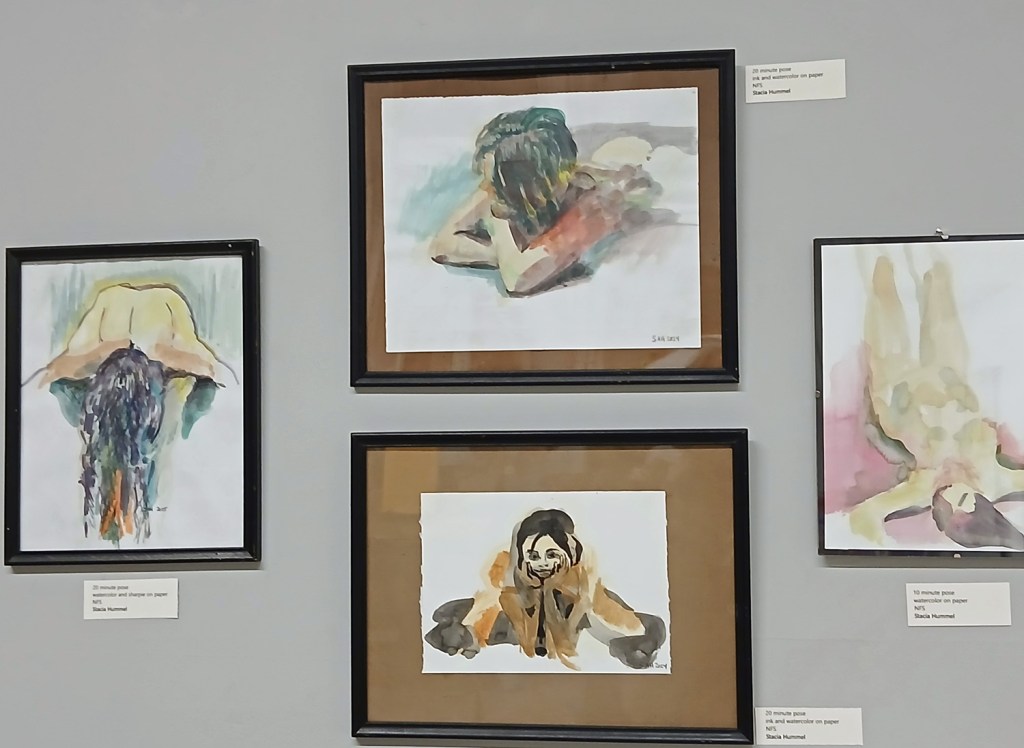
Last week, one of the women in the class (Carol) very generously offered her studio for a pop up art show. The idea was you had to show work that was done from life in one of the figure drawing classes you attend. Most were from the Columbia workshop. The work was dropped off early in the week and was hung up for an opening on Friday evening. At the end of the evening, you took your work home. Carol was very interested in showing the variety of ways people present the figure and also wanted to show process so there was lots of work that was not ‘finished’ in the traditional sense of art. I was particularly interested in studying hands. Below are some examples of the work on display. Click on any piece to enlarge in new window.

Unfortunately I just started clicking away with my camera and many of the names on the tags are too hard to see. However, I know that (aside from my own work) there is work above by Carol, Stacy, and Ashley.

Emerald Print Exchange 2025

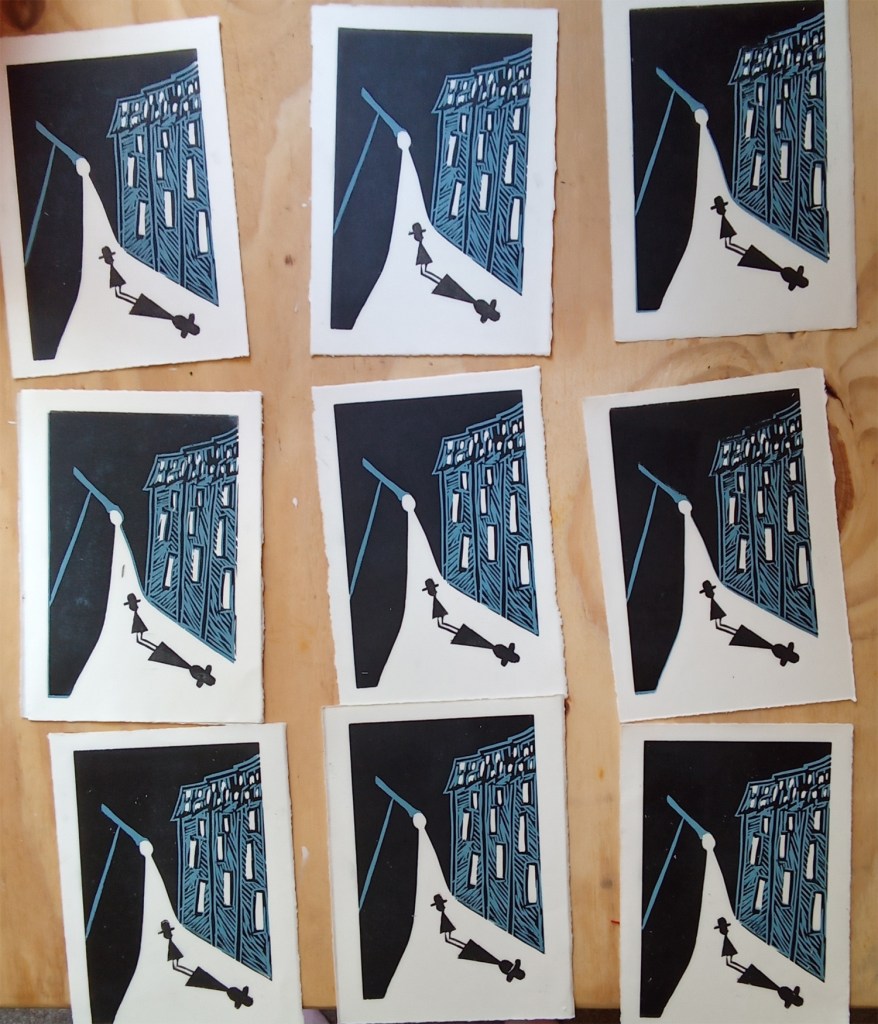
This is my entry this year into the Emerald Print Exchange hosted by Whiteaker Printmakers in Eugene, Oregon. With this particular exchange, the organization retains 2 of the prints to be used for fundraising purposes. The one fundraiser is a reverse auction, meaning the price goes down a bit each day. So you may be able to collect a great print for a very fair price (unless someone else snatches it up at he higher price in fear they will not get it at all) Oh well! I will post when the auction is live, which will not be until the fall. Here is my entry below. It is called The Protector #2 which is a reduction linocut, edition of 12. Paper size is 5″ x 7″.

Here is the print in process

You can see my entry last here by clicking here.

From Drawing Workshops

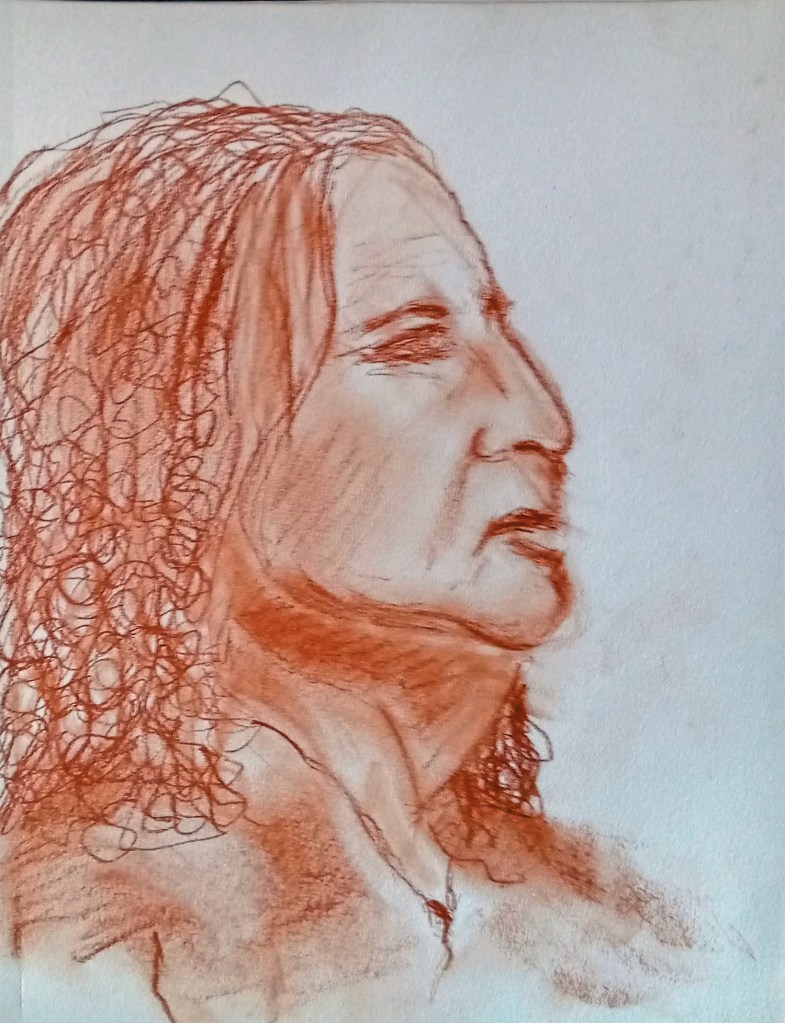
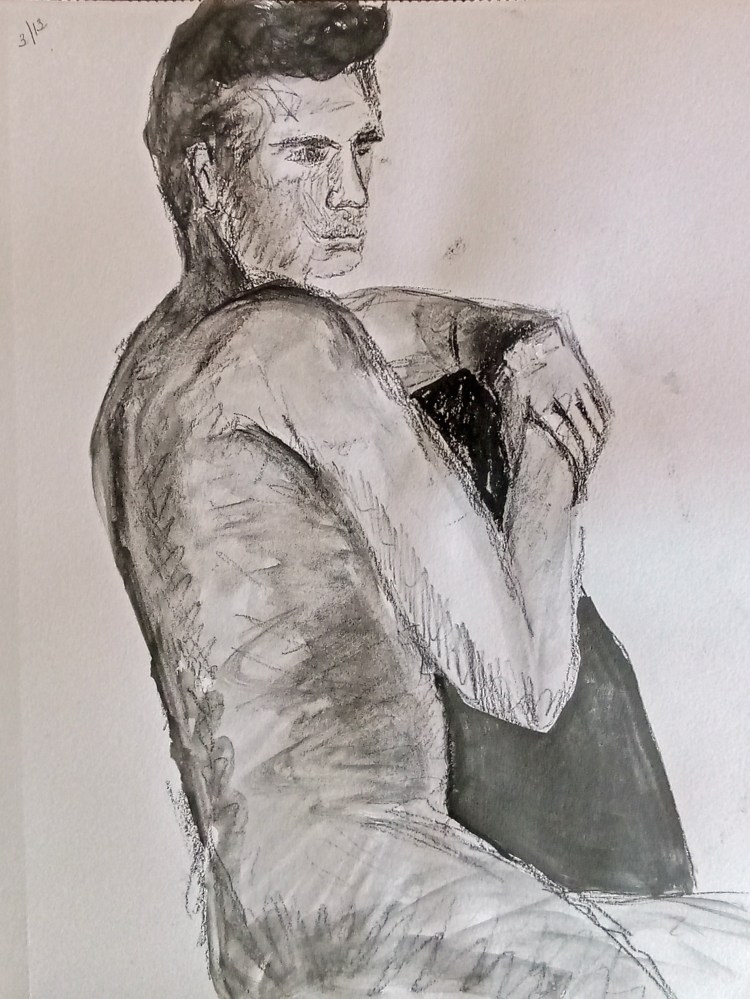
I attend a few drawing sessions on a fairly regular basis. I go with grand plans but always end up using the most basic materials (pencil, conte crayon, etc.) My favorite are the short pose workshops because I tend to have a short attention span.
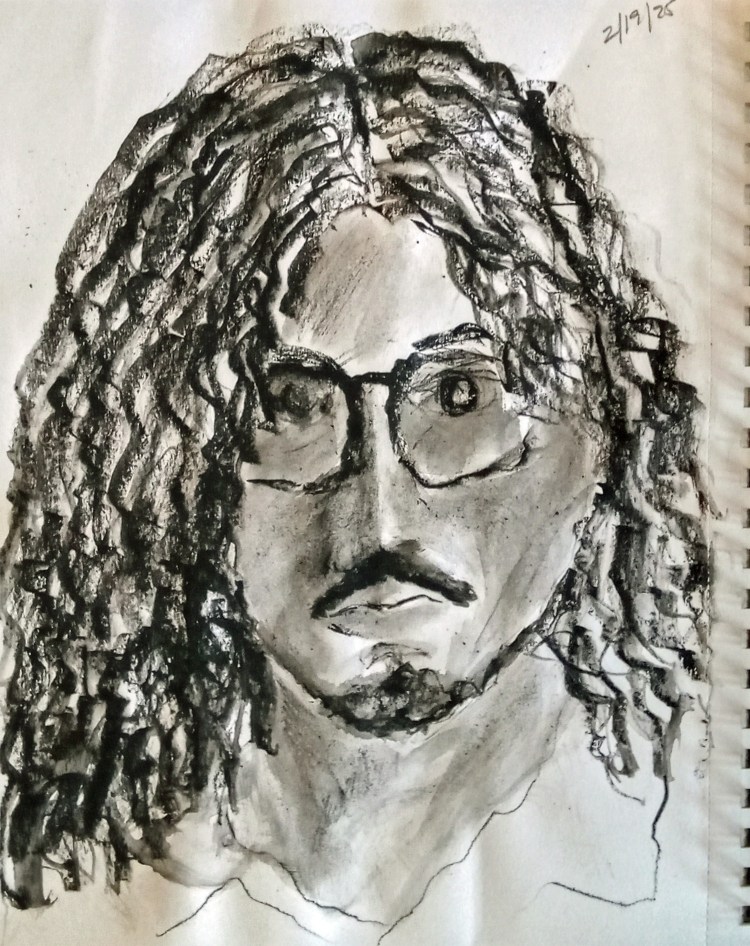
This model really intrigued me; especially his face. You can click on any image to enlarge.

Here are a few more from different sessions
New Collage & Drawing Workshop

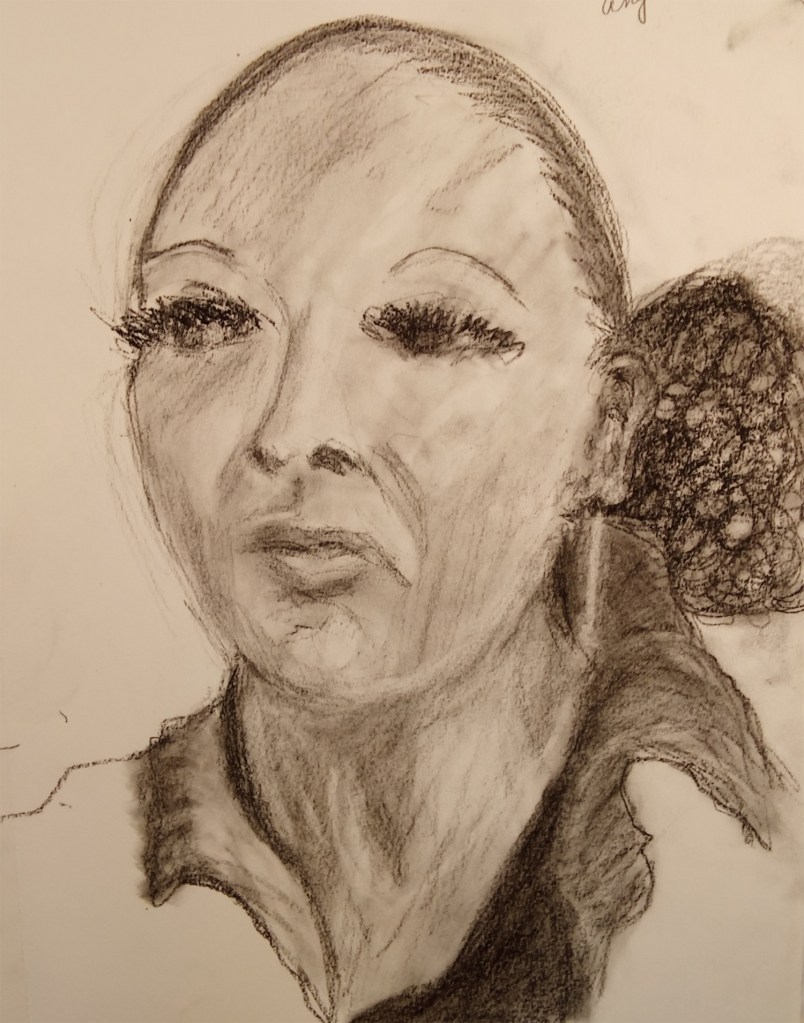
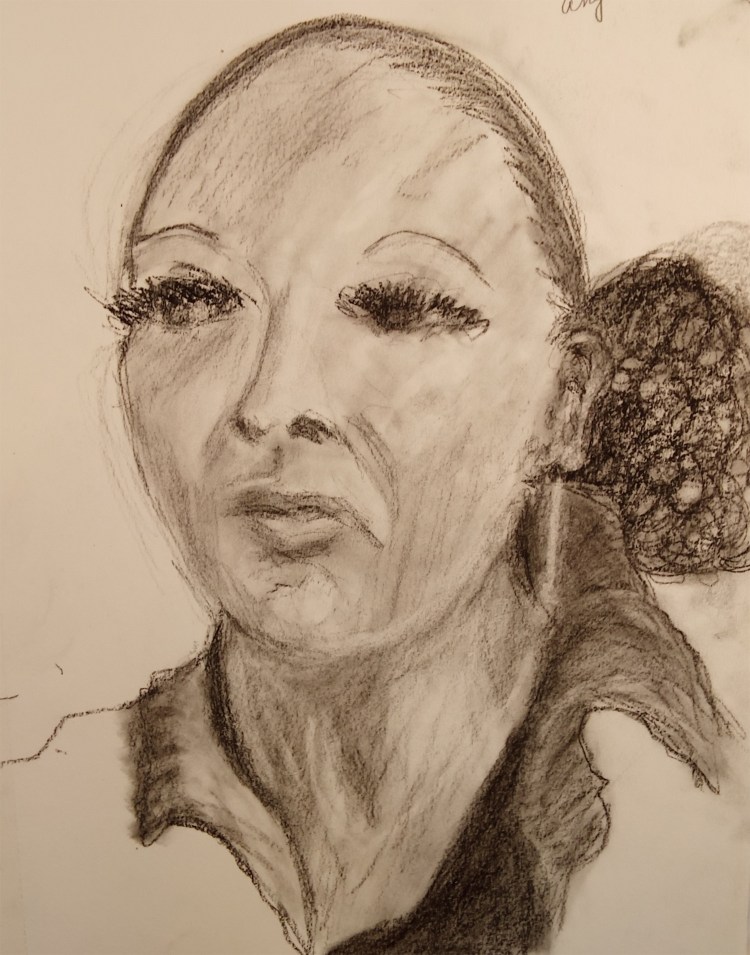
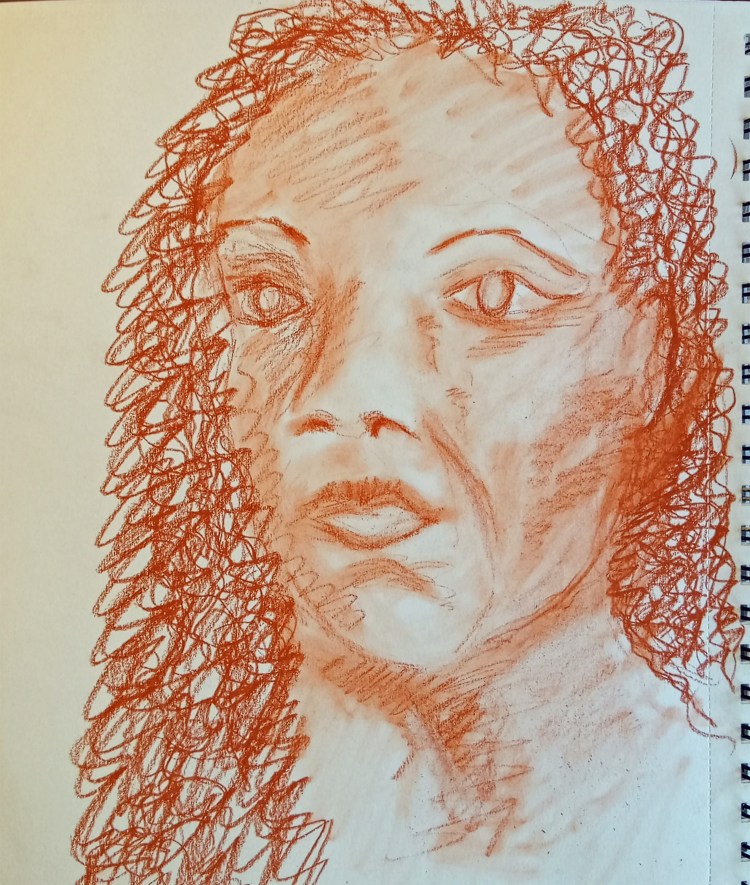
Ok so this is an eclectic post but I figure I will fit these two in since they were both done this week. The portrait (see enlarged version below) is from a weekly figure drawing session. And the collage (also enlarged below) is in my one medium size collage sketchbook.

Starting with the collage, well, even I can’t figure out what is going on in this crazy scene. A biblical era Speakeasy? Is she a bootlegger? What is going on with the bread being thrown around? This whole scene looks like a shady operation to me!

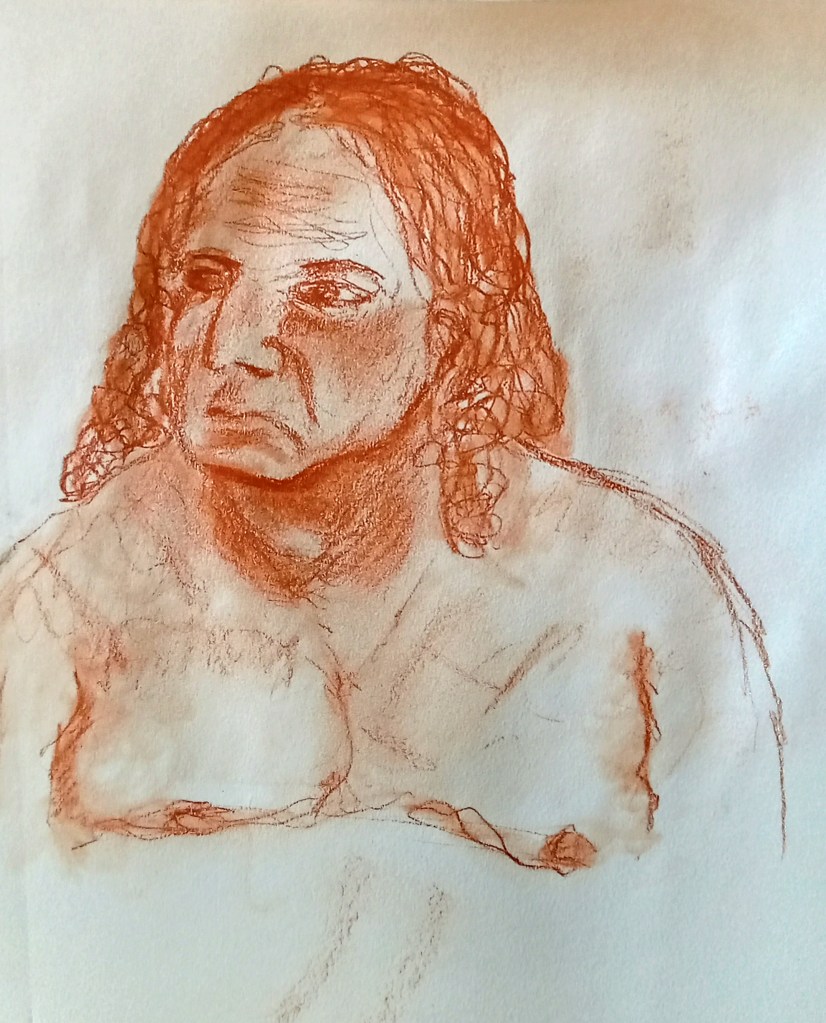
The portrait below is of a model named Angel and she was a very striking woman. These sessions take place weekly and the models vary as far as life models, costume/portrait models, and apparently (though I am new so I have not seen this aspect yet), local politicians, musicians, etc.
Cyanotype project

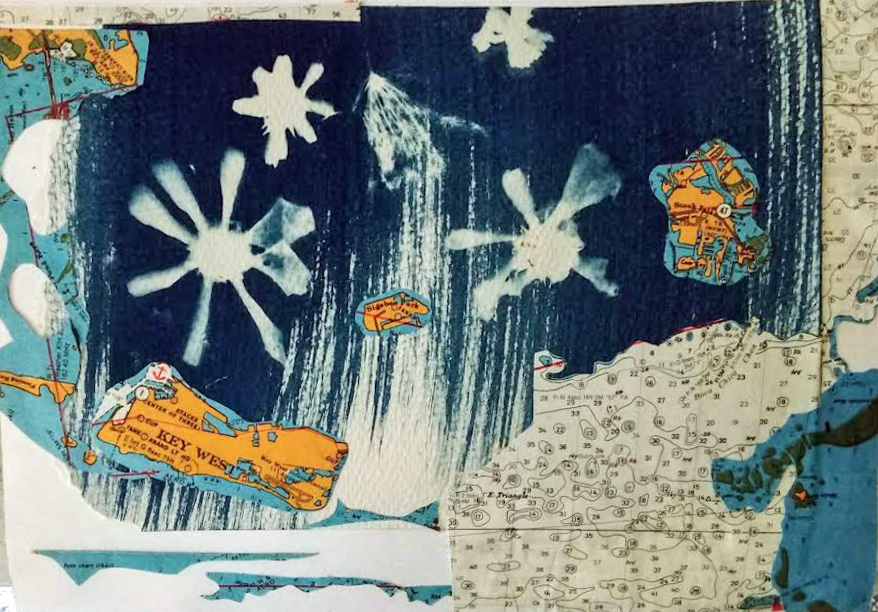
I never made a cyanotype before and always wanted to try it. Yesterday, I finally had the opportunity at an event hosted by Arts+, the community arts organization where I am on faculty. I choose a sprig of grass as my subject (What kind? Well, I do not even attempt to key grasses; you have to be half crazy. Oh wait a minute…. my boss does!!! Yikes, hope he doesn’t read this post! ) Anyway, the way my cyanotype came out, it was sort of stencil like so while it was technically fine, it was not exciting or very creative. However, my husband’s had much flair. It pays to have no idea of what you are trying to do – Really! No expectations! So I appropriated his and turned it into a collage.

Spontaneous Collages

Some weekends I have either no specific project in mind or am in the waiting mode regarding another project. This weekend I found myself in the waiting mode for a printing project to dry. It is so humid here that ink can take up to a week to dry, sometimes even longer, depending on how many layers of ink you have on the print. So it was a good weekend to do some collage work because I could easily put it down and go back to it if need be.

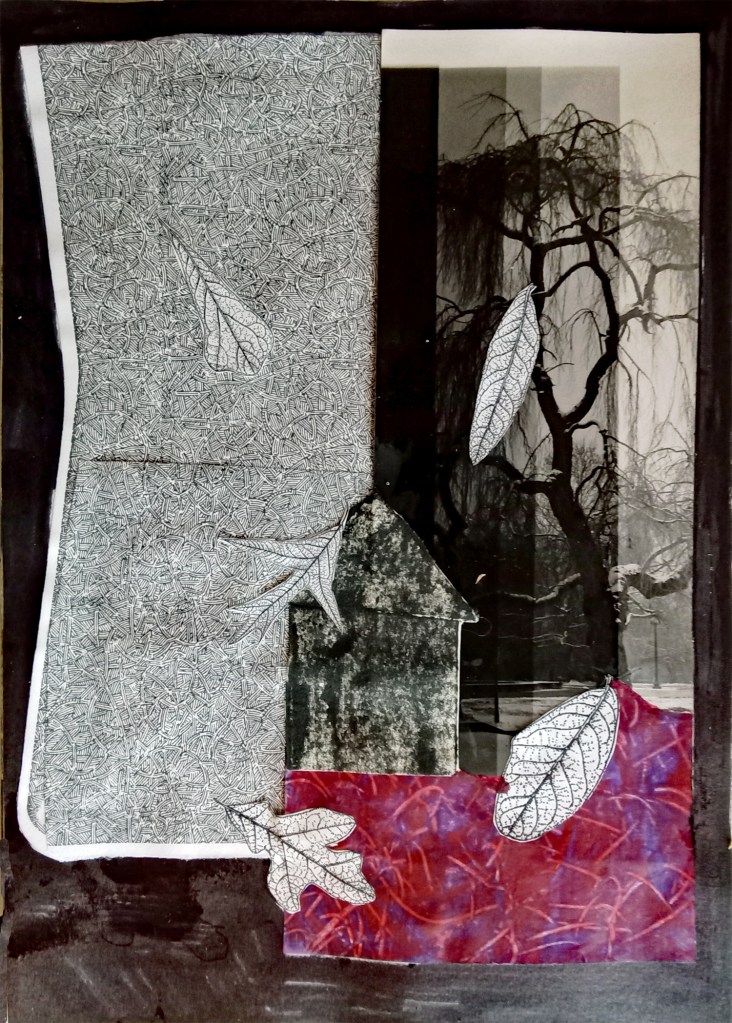
The first collage is actually not from this weekend but a similar weekend last month. The materials used were some papers/photos from a materials exchange with members at the Plastic Club. The tree photo and the red paper at the bottom are things I received with the exchange. The house is from a print I made and the pattern is the inside of an envelope. The leaves are cut out from something; I don’t remember what.

The next collage was inspired by some paper my friend Michelle gave to me. She is always buying me paper or sending me paper she finds around her studio. I don’t know why but I am delighted just the same! Anyway, this is beautiful soft, cottony white paper. Quite thick. I drew into it with wet carbon pencils, torn it here and there, and collaged in a few cut up intaglio prints. It called to be sewn into. So I made it and stitched it and then added it into one of my larger sketchbooks.

The last piece is comprised of intaglio prints I made and the photograph is from my old neighborhood. Corner bars often advertised “New York TV”. This was way before cable TV was widely available.

Continuing the Rodin Project

My last post on this topic I talked about how it got started. I have enjoyed reading and looking at the images in this book but it is now time to return it to the library. What I have become absolutely compelled to do was recreate some of the photographic portraits in this book of Rodin and Camille Claudel. Now these portraits are a bit disturbing with the dark sunken eyes, etc. But although we tend to romanticize the lives of artists the fact of the matter is this: it is a very difficult life. And living the time they did, life was difficult for a variety of reasons. So I will start with my favorite portrait from this which is a portrait of Camille Claudel. This photo was taken when she was institutionalized. I will show it below on its own then along with the photo from which it was done.

The next piece is of Rodin, when he was quite young. Again, note the deep set eyes. Made more dramatic by the lighting of the photo.

This last piece is not a portrait but a sculpture. It is a sketch from dry media as opposed to the watercolors above. I am not sure why I choose to cram this into such a small space (a 5 X 8″ sketchbook) but I did and maybe that was part of the challenge along with the very exaggerated angles of this sculpture. I did it from a photograph of the plaster cast. The bronze piece is called Inner Voice (The Muse) and is at the Victoria and Albert Museum but the book lists the cast as Armless Meditation.

The book from which these works were copied is called Rodin, by Masson & Mattiussi, published by Flammarion Musee Rodin.

Unlikely People

Sometimes, the most unlikely people sneak into your life and steal your heart. That person for me was my dear friend Mr. Caldwell. Though we had absolutely nothing in common, we made each other laugh and, eventually, were able to talk freely to one another about all subjects.

Mr. Caldwell really never got past that I did not want to “take some of that fat back” home with me to cook with. Nor did he grasp that I had no special way to cook okra, and, in fact, I really never thought of okra until I moved to North Carolina. Quite honestly, when we first met, I don’t even think either of us really understood what the other one was saying!

Actually, there is one thing in our backgrounds that Mr. Caldwell and I did share in common – Ink. Aside from being a farmer, Mr. Caldwell was a production manager at a commercial ink company. As a professional fine art printmaker, I am acquainted with ink and was interested to hear about other types of ink.

I talked about Mr. Caldwell all of the time to my friends and family. Someone asked what he called me and I thought about how he changed his way of addressing me over the eight years we were friends. In fact, I think the various ways he addressed me pretty much sums up the progression of our friendship. So here it goes: Miss Podolsky ~ Miss Diane ~ Diane ~ Honey Child and finally: You Little Runt! (exclamation mark added because it was always said with emphasis). I guess it is a good place to point out that I am barely five feet tall and Mr. Caldwell stood at 6 feet 6 inches.

Mr. Caldwell has only been gone a short while. The turnout at his 95th birthday party and his too soon after funeral was a testament to how much he was loved by so many people. So below are a few photographs of my dear friend.

Collecting the harvest
At K & W
Tomato harvest
Buddies