Latta Prairie – a special place

In my old neighborhood, I had just started to explore my local park for its natural history offerings – particularly the plants and birds. I had been familiar with that park for a long time but more from a recreational stance. When I came to NC, I had to not only learn new species of things but new places. I remember the first day I set out to Latta Prairie and Preserve with a backpack full of field guilds, notebooks and plant keys and thinking how well I had started to get to know my old park and now I was having to start all over.

Latta Prairie

During the past seven years, I actually cannot think of a place that has ever given me more pleasure and outdoor adventure than Latta Preserve. The prairie is a particular place dear to my heart. Many of my fondest memories here take me back to Latta: Birding with Audubon and my friend Penny, my first official collecting* duties for the herbarium where I now work, the Fairy houses left behind from the Fairy Festival, outings with Central Carolina Master Naturalists, a walking group that stayed together for 3 1/2 years until the Pandemic hit. Not to mention all the time my husband and I spent hiking there during the pandemic, Yes, it is a special place.

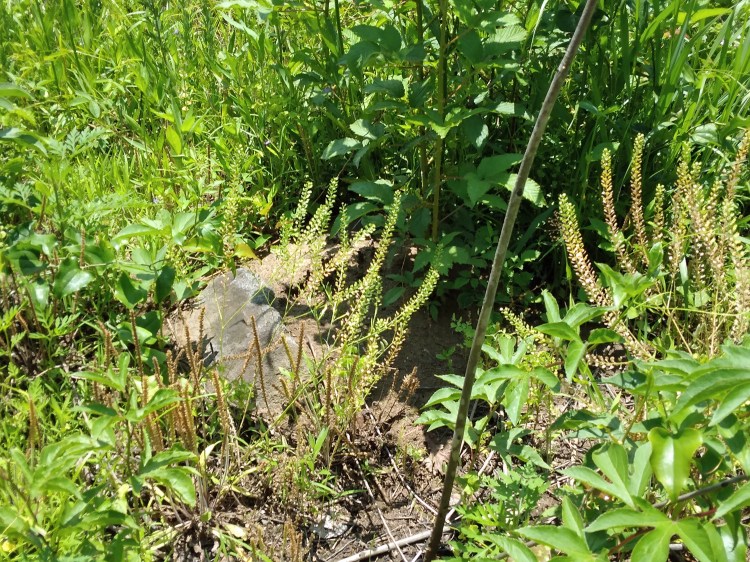
I do not live as close to Latta as I used to, but I still visit when I want to do something special. Here are a few photos from my last walk around the prairie about two weeks ago. I wanted to show one overview, a few special points, and what the flora looked like in natural settings. Many of these plants are things people have in their yards or grow in sidewalk cracks. But in their natural setting, they are much more splendid.

Asclepias spp. (Butterfly weed)
Passiflora spp. (Passion flower)
Clematis spp. – fruiting structure
Lepidium spp. (Pepper grass)
Oenothera spp. (Sundrop)
Poaceae Family (Grasses)

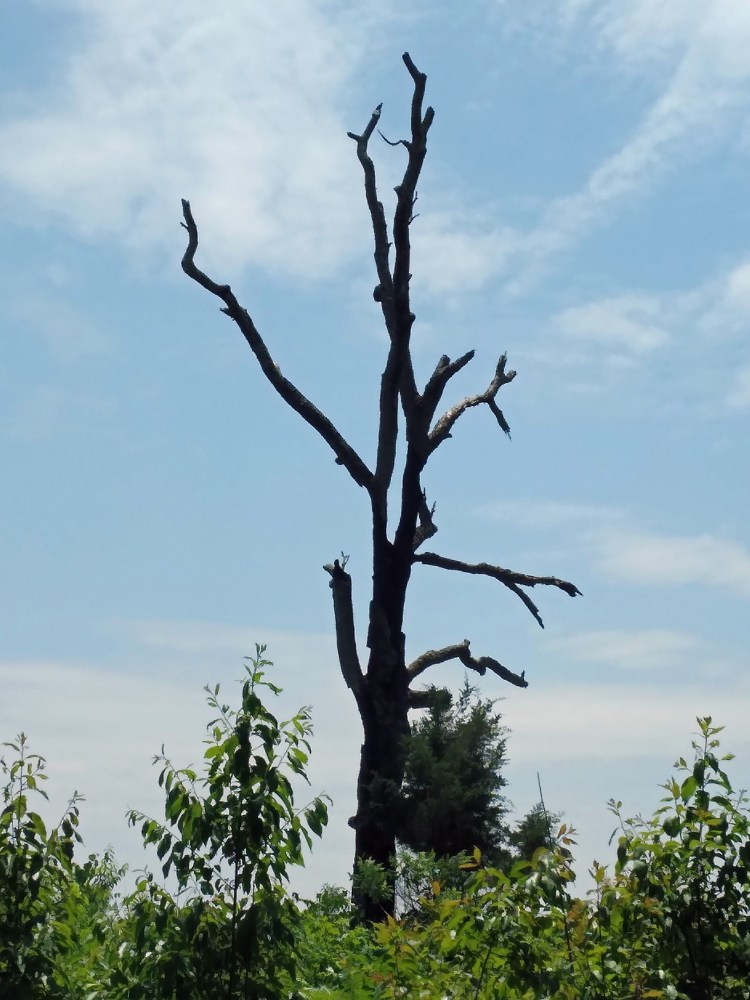
Now the images below are some landmarks. The big old dead tree. I can’t believe that is still standing, but it is. And right next to it is a path that leads to a well. Wells scare me, but there is metal grating on top of this one for safety. The few times I peeked in, there was usually a snake of some sort sunning himself along the sides by the top of the well.
*Please note – collecting wild plants, especially from nature preserves, is not allowed. When I talk about collecting, it is with permission because of my employment in an herbarium.
Exhibition Talk Video

This is a talk I gave during a show of my artist books at the Hickory Museum of Art in 2022. The video was recorded spur of the moment on my phone by my husband. I was very fortunate to receive a grant to have some professional editing done with an emphasis on being able to show more details of the books as each one was discussed. This project was supported by the North Carolina Arts Council, a division of the Department of Natural and Cultural Resources, the Arts & Science Council, and the Cabarrus Arts Council. Special thanks to Robert Y. Lee for editing the video.

Gull Print Drawings

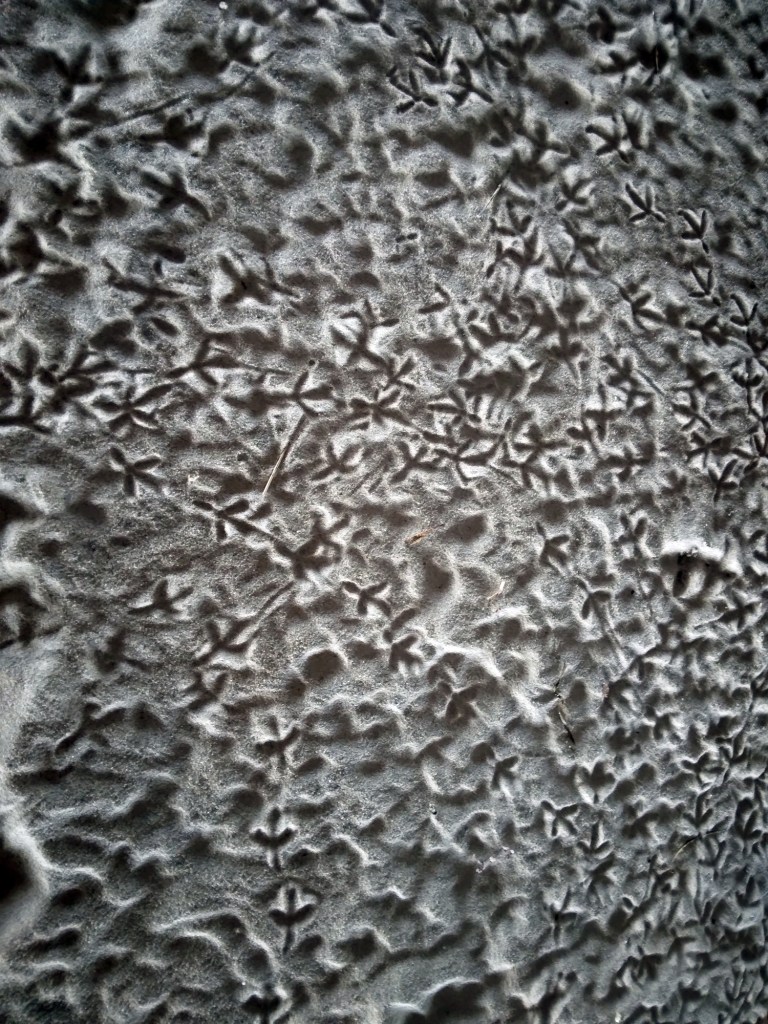
Last week, walking under a pier along a beach in Virginia by the Chesapeake I looked down and noticed a blanket of Gull footprints in the sand.

Being a fan of textures and patterns, I thought this might be fun to try to print or draw. Drawing first! I used my black sketchbook and some white and metallic pens and came up with this.

After drawing the footprints, I started to fill in the white areas working from the lower left to the upper right corner. In the process, when I was about 3/4 way finished, I liked how it looked with only part of the image filled in and the top left black. However, I decided to finish this as originally planned and do another one with only a partial fill in of the white.

Thanks for looking at my sketches!

New Paintings

To call these ‘new’ is sort of misleading. One of them (City, Spring) is actually new. But the other painting (Winter) is something I worked off and on at for about 2 years. I thought it was done but something still didn’t seem right so I had it sitting on a small easel so I could look at it off and on to decide if it was really done or not. Then one day, I took the easel down to dust. When I put the painting back, I placed it upside down not realizing it. Then when I looked at it, it all of the sudden seemed like a whole new painting. I made one or two small marks on it and declared it finished, finally! See, it does pay to clean every once in awhile!

City, Spring, Acrylic on Panel, 12″ x 12″

Winter, Acrylic on Panel, 16″ x 16″

Drawings – Seed Houses (part 1 of 2)

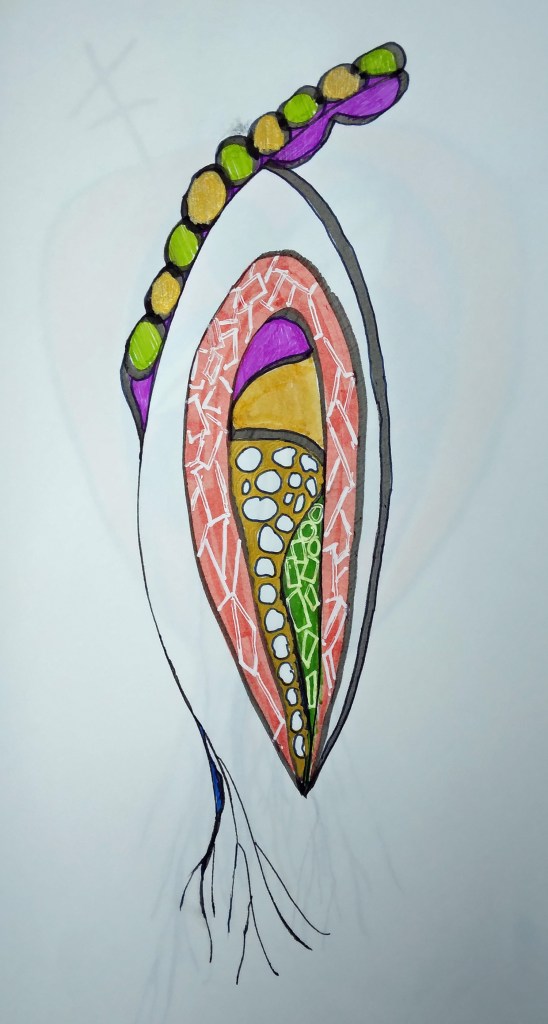
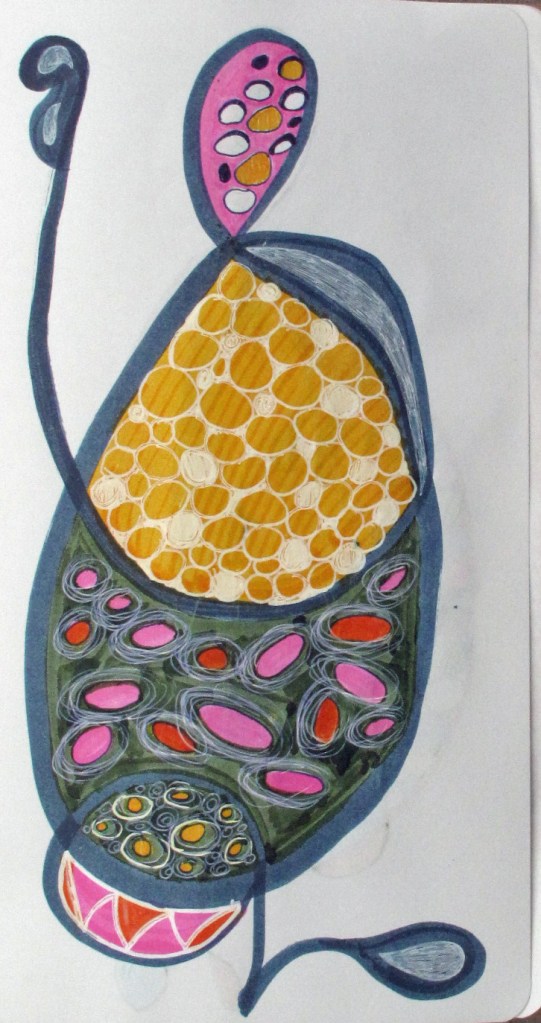
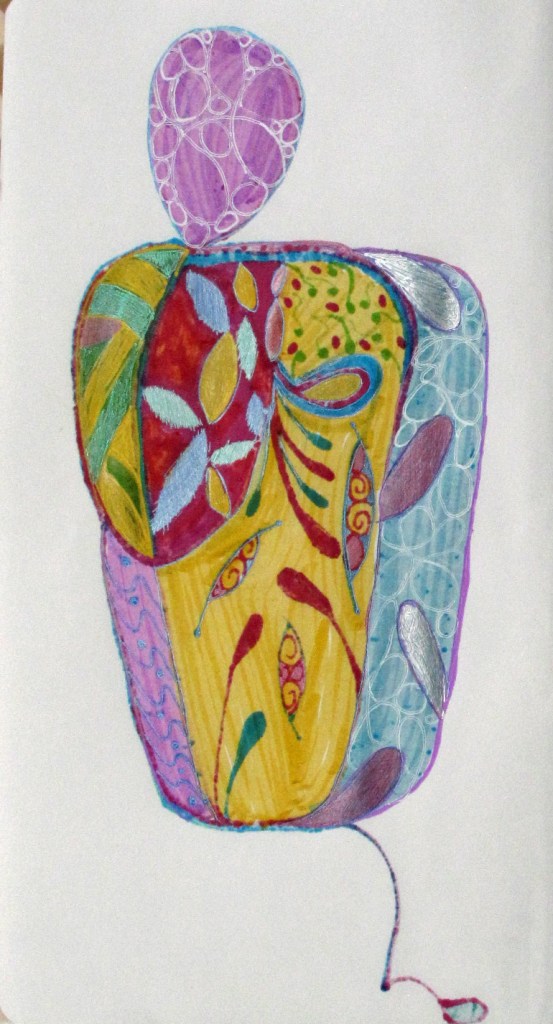
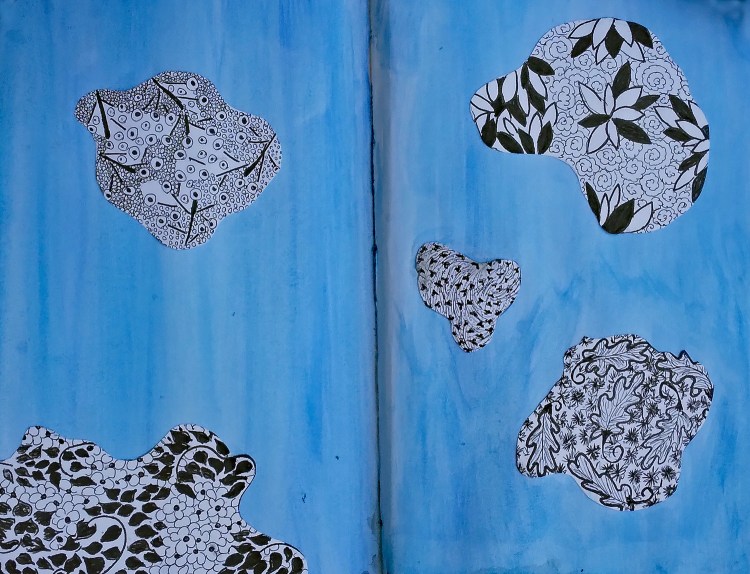
A few posts ago I showed some drawings I was doing on what I called “Seed People”. Well, seed people need a place to live so here are some Seed Houses. On some of these you can see a ghost of the image from the other side of the paper, but I don’t think it detracts that much. And that is what sketch books are for – to have fun and not worry about such things. Next week – Seed houses on black paper and some seed neighborhoods.

Drawings – Seed People

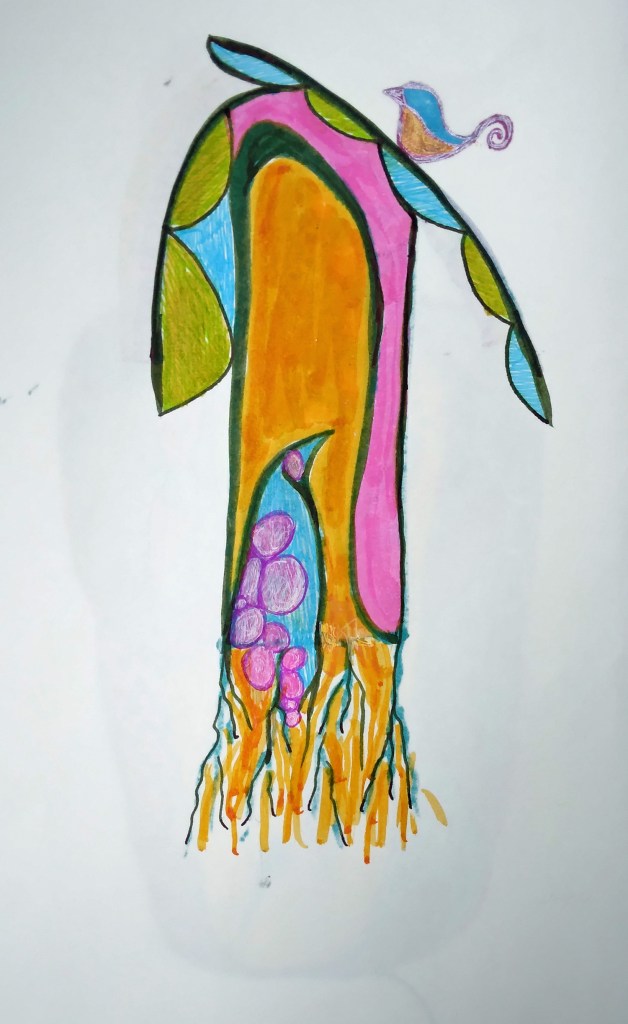
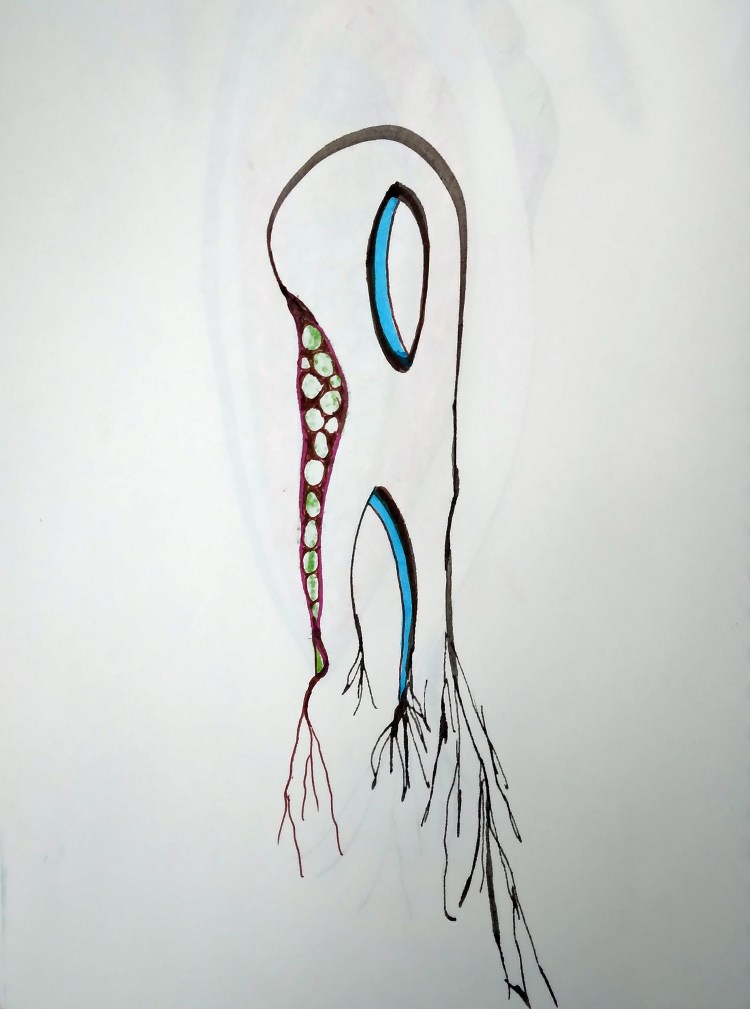
Not long ago I mentioned that I like to sit and doodle. Many of my doodles recently have been these characters that I decided to call seed people. The thought of seeds kept coming into my mind – first from the word ‘Seed’ that I made during my lettering class then through a guided meditation I did that used the imagery of sowing seeds as a metaphor. Sometimes I give them bits of clothing accessories like ties or suspenders or hats but this group seems to be without such adornments. I am also thinking I need to make some seed houses for them. I made a pile of these but here are a few of the seed people below.

Note that the first and third images, shown below, are pretty similar. This is because I created the one with a sharpie and it bled through the page. Rather than wasting a page (being frugal as I am), I decided to use it as a challenge to see what I could make using the marks that bled through as a guide.

Drawings – Eras of Creation

There was scholar by the name of Marcus Borg whose focus for his many books was historical interpretations of sacred texts. An overall theme in a chapter of a recent book I read was how ancient communities explained where the world came from. Many of us are familiar with the Creation story from the first chapter of the Hebrew Bible: On the first day God created, etc. Borg posed the word Day may have actually been another way to say Era. To think of plants or animals being formed over several hundred or thousand years rather than a single day sort of, in my mind, marries the idea of the Creation story with Evolution.

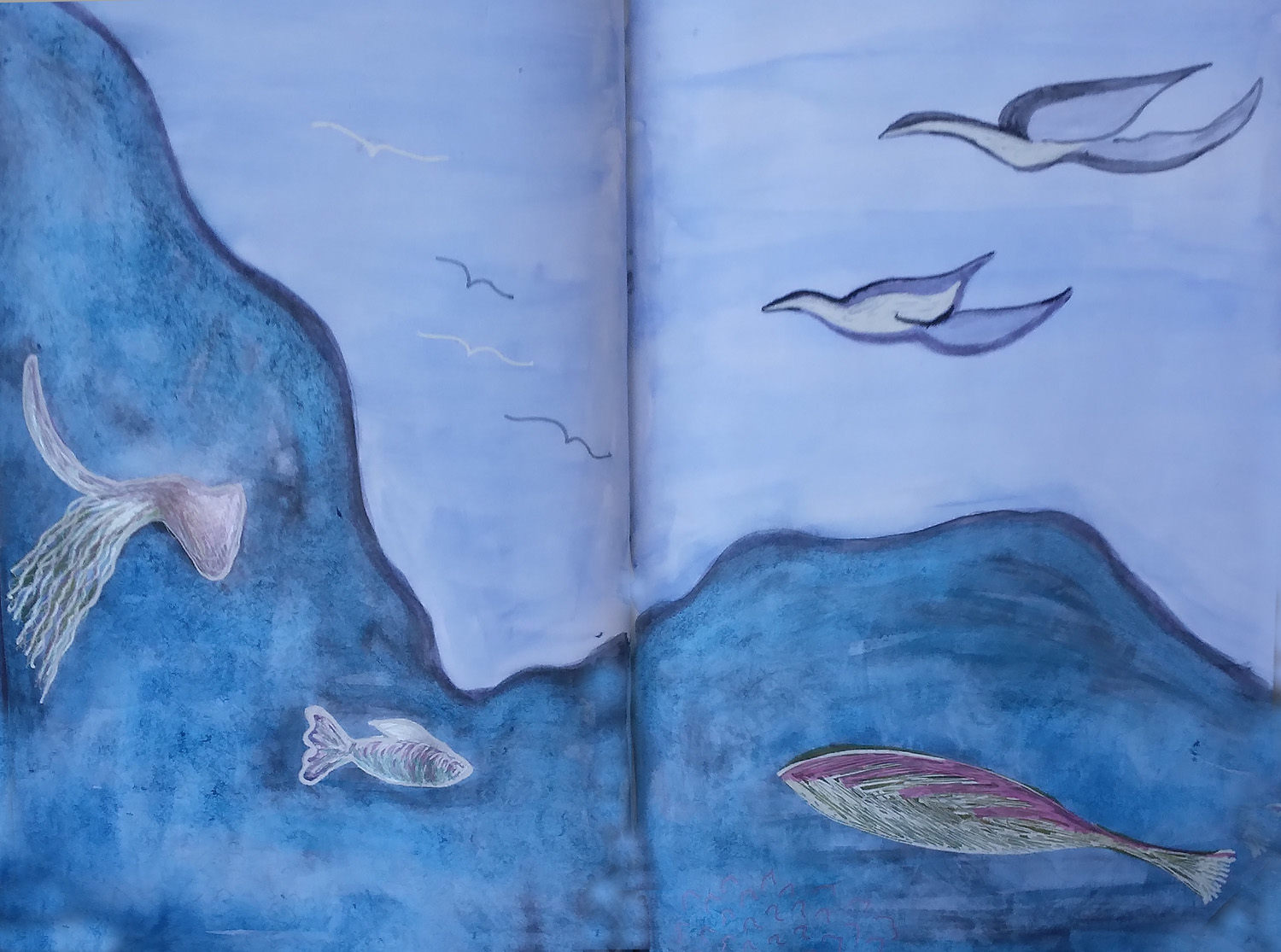
So began my illustration of the Eras of Creation. This is a topic that is sort of easy to get carried away with so to keep some parameters, I opted for a minimalistic approach. Though there is nothing simple about the drawings, I imposed some limits on my choices: very limited colors, very limited shapes, the minimal amount of drawing to get an idea across. Below are the results of my exploration into this theme.

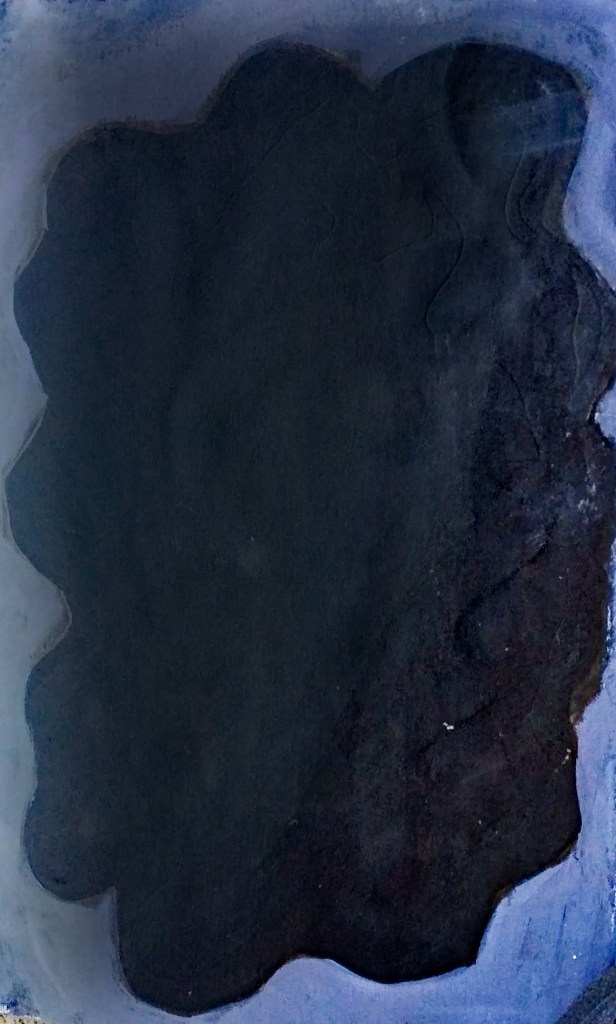
Below: The Beginning – A Formless Mass

Below: Era of Light & Dark

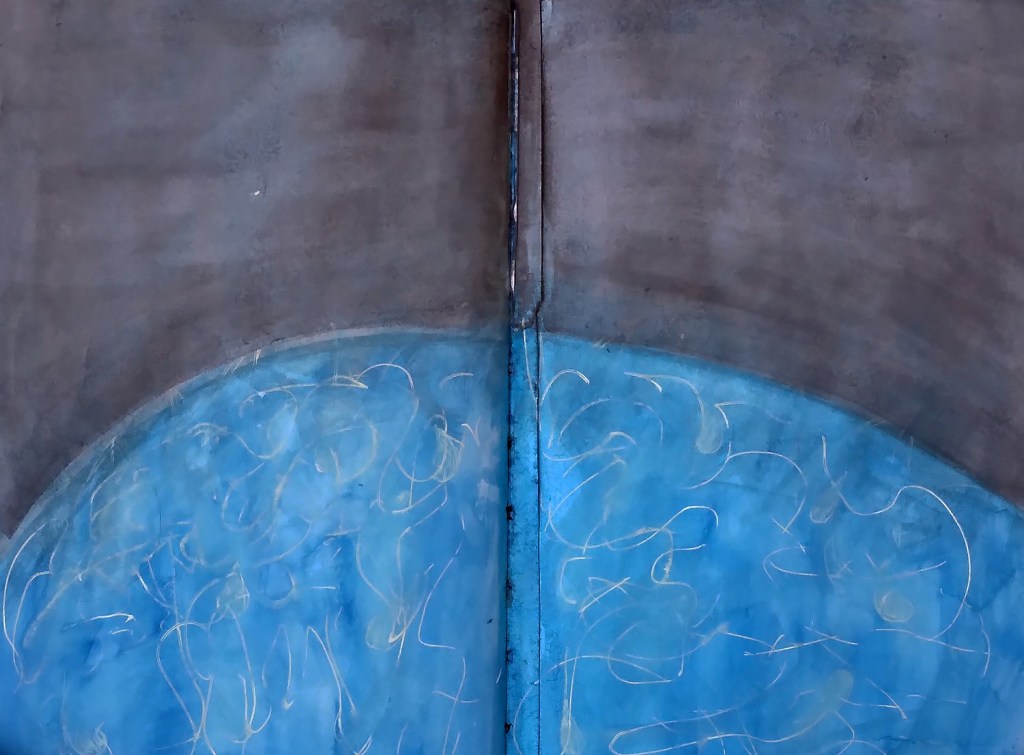
Below: Era of Separate Domes for Water & Sky

Below: Era of Land Mass, Sea, & Vegetation

Below: Era of Sun, Moon, Stars, Time

Below: Era of Avian & Sea Life

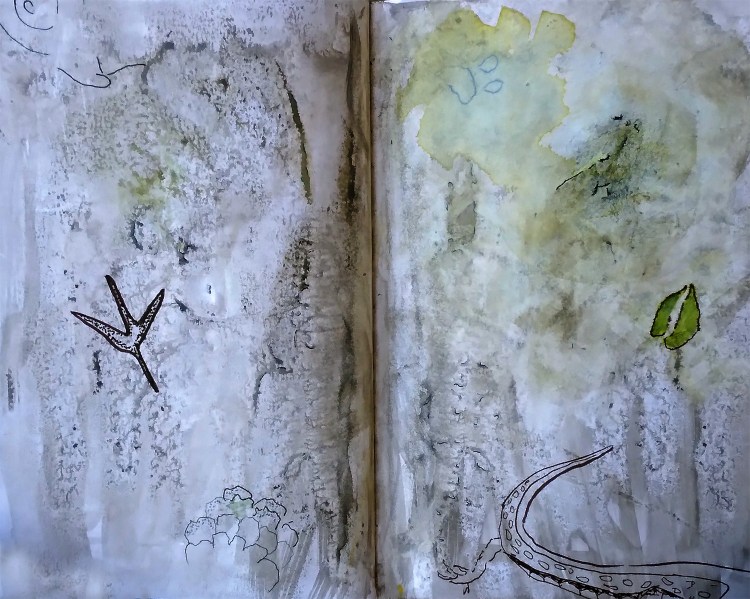
Below: Era of Creepy Crawly Things

Below: Era of People/Human Type Beings

So though some pages are a bit more involved than others, I still tried to restrain myself as much as possible and get the ideas across with economy of shape, color, etc. My two favorites are the Creepy Crawly pages and the People pages. If you look closely, you can see fossil type shapes emphasized on the Creepy Crawly page. On the human page, I chose to depict the continents of Africa and South America. The reason for this is because people/humans (or whatever the term is for what we were millions of years ago) originated in Africa and I was always intrigued by how, even now, you can see how Africa and South America were joined. They fit together like a puzzle!

****

For this project I used a Stillman and Birn Softcover Epsilon Sketchbook, 5.5″ x 8.5″. For making the images, I used whatever suited the task best for that Era but, in general, I used Kuratake watercolors which are more gouache like in the way they behave. I particularly like a set of graphite colors they make. Additionally I used traditional transparent watercolor, gel and pigma micron pens, and some fountain pen ink. If you have a question on one particular image please feel free to contact me or ask in the comment section of the blog.