Another, More Accurate View of Yesterday’s Post

Yesterday I posted an image of my new desk and some of the things on top of it. Today, I am giving you more of a true to life action shot.

Desk – Another View

So here we are, all set up and working. Cat on the mat, cup o’ tea, weeds to study, field guides, etc. And….the real view behind that closed door with the lovely shadow – the toilet! Yep, if ever I were to get to full of myself, only a brief glance upward keeps me humble. So you may ask, ‘why not just close the door?’. Good question. Here is the answer – the litter box is right inside that door. Yes, there is another entrance to that bathroom off the main hallway. But God forbid the Cat would have to walk outside the room, through the living room, into the hallway, then across the bathroom instead of simply jumping off the table and landing right near the litter box. And as you know, you can’t upset the Cat!

Not the Still Life I Set Out to Write About

This post was originally going to be called Still Life with Weeds and it was going to talk about the weeds in the jar. But after looking at some of the things on my desk I decided to change course. So we will talk about the jar of weeds in my next post.

Desk

First, the desk itself. So this desk is something that I have been waiting for, oh, probably 50 some years give or take. There is a standing joke about this desk. Over the past few months, I have become intrigued with fountain pens and all things related to stationary. So the joke was that I needed a desk to go underneath my fountain pens. Actually, though, I have always wanted a writing desk that was big enough to accommodate several projects at once. With the pandemic forcing my husband to work from home, I am somewhat confined to my studio all day so I figured I may as well make it the way I always wanted.

Box

I spent the day organizing things, tidying (I am a big fan of Marie Kondo) and setting up my desk. When I went to do the post on the weeds, I noticed some of the things I chose to put on my desk. Above is a box my brother made for me. It was a wonderful surprise to get it. I have things inside that I use often when playing with plants such as magnifying loupe, tweezers, etc. as well as basic desk supplies. Very handy and very beautiful.

Cat Mat

This is a mat for my cat Lulu. She likes to sit with me so this is her spot. But there is a story behind this mat. First, the wool for it came from a friend of mine, Phyllis, as a holiday gift one year. My sister took the roving (unspun wool) and brought it to someone she knows who spins. After it was spun, my sister crocheted the mat.

Ceramic Cup

This ceramic cup holds my fountain pens. The cup was made by my daughter when she was about four. I used to occasionally take her to class with me. I went to a small Catholic college and you could do such things at the time. So she would come to the clay studio and Sister Jolanta would hand her a ball of clay. The handle broke off long ago but I think that adds to the charm.

Shadow

This has nothing to do with the desk itself but when I looked up from my desk chair I saw a shadow of some of the items on my desk casted onto the door, included the aforementioned weeds. So I included it because it is kind of another still life of another sort and, mainly, because my friend Claudia likes shadows so this is for her.

Wildflower ‘Weeds’: Take a Second Look

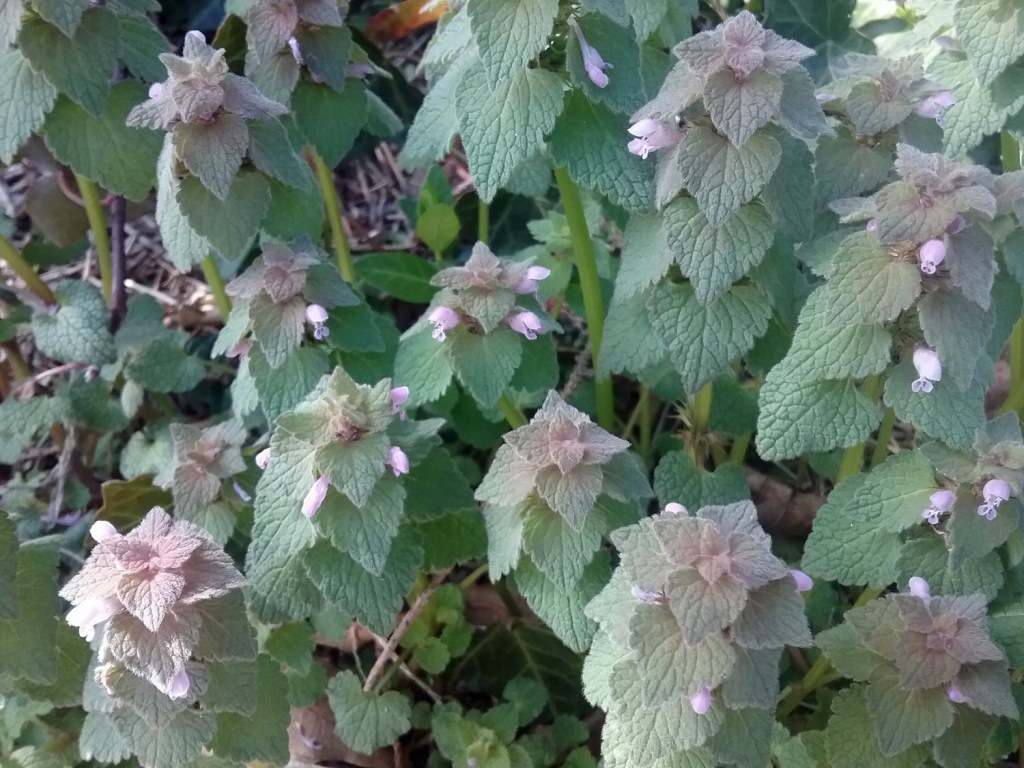
At a quick glance, these two common lawn plants are mistaken for one another because they are considered “weeds” and, therefore, not appreciated. Even nature enthusiasts are often tricked by these two closely related plants because they often grow in patches among one another. So let’s take a close look at them, but not in bunches.

How are the plants similar? Well, they both have opposite leaves and square stems. These are two characteristics of plants that are part of the mint family: Lamiaceae (pronounced Lame-E-A-C-E). Other similarities are that they have purple, lipped flowers that grow from the leaf axils, which is the part where the base of the leaf meets the stem of the plant. They are about the same height, approx. 6 and seem to grow in patches, and, as stated above, often mixed with each other. It is no wonder that, without close examination a person can think they are the same. So what are they?

The plant on the top is Lamium purpureum (common name is Purple Dead Nettle) and the bottom plant is Lamium amplexicaule (commonly known as Henbit). As you can see from the first part of both plants’ names, they are from the same genus (Lamium) which, in this case, is also very similar to the family name of the plants (Lamiaceae – remember that???).

Now how are they different? Ah, well this is where close observation is needed. The key main difference with these two plants are in the leaves. Now looking at them pictured above, it may seem obvious. But close together in sprawling patches, this is not so clear. I will refer to each by the common name to further explain. The Purple Dead Nettle has numerous densely packed leaves that point downward. These leaves are also on tiny stalks (or petioles). The stalks are very short on the top leaves and get progressively longer, but are never very long with the exception of the two leaves at the very bottom of the plant. The Henbit has no stalks on the leaves. Another word for this is that the leaves are sessile, or attached right to the stem. The Henbit also has two leaves with very long stalks on the bottom of the plant. The stem of the Henbit is much thinner than the Dead Nettle. The leaves of the Dead Nettle are also often tinged purple. The tube shaped base on the flower of the Henbit is also much longer than the Dead Nettle and there tend to be fewer flowers on Henbit. So based on all this information, can you identify the flower below? The answer is a few lines down after the picture.

Answer: Lamium amplexicaule, commonly known as Henbit! Did you get it right? If not, that’s ok. Practice, practice!

Wrap up of the Grocery List Project

Thank you Rick Wright for this wonderful image!

A BIG thank you for everyone who participated in this project for not only letting us peek into your shopping cart but for helping to bring attention to food insecurity. Below are answers to a question I put out last week. That question was: Did you change anything in your cooking/shopping habits during the pandemic that ended up to be something you like and will continue? 

Below are the answers. Each * indicates a response from one of the participants. Following those answers is the compilation of hints for donating to food programs and lists of food pantries throughout the U.S.

Answers to the Question:

*Before shutdown, my husband and I, busy with our own schedules, ate lunches out, alone or with friends.  Dinners were a combination of home prepared, left-overs, or take-out.  After shutdown, home prepared, a little take-out.  Our main meal is together and eaten around noon.  The evening meal is usually “every man for themselves”, prepared in our kitchen. Once the kitchen was cleaned out, reorganized, then restocked … began to realize there was money left at the end of the month!  I knew a good portion of funds ear-marked for entertainment were spent on eating out, seeing what was still in the checking account and/or not on the credit card bill was eye opening! My goal is to never return to that level of eating out again.  To remain mindful of how often I am going out.  I learned the more I shopped, more I cooked, the easier, more streamlined the process became. 

*I have become much more organized with a well-stocked freezer and pantry. I actually label what I put in the freezer so that I know what it is. I rarely used a shopping list before, so I would forget half of what I needed. The list is a new, great idea. I am buying what I really want (ignoring cost) because dinner is the day’s big event.

*I think the one thing that changed, since we tried to grocery shop less often, was fresh vegetables- we started our indoor seed starting light and started growing our own lettuce and cilantro, as those were things that don’t last as long when you shop fewer times a month, but that we eat a lot of.

*Honestly, I don’t do that much different except try to plan a little farther ahead so I don’t go to the store very often.  I just wear my mask and go to the store when I need to.  I did use the coupons in the Charlotte Observer for Harris Teeter to plan my shopping sometimes.  They offer a $20 off $100 purchase sometimes and I try to take advantage of that and buy things FeedNC needs with that purchase.  Good motivation.  Otherwise I’m not likely to spend $100 at once at the store!

*I started to add more vegetable and chicken stock to my grocery list, as I was trying to eat more healthy by making soups. They fill me up and I found them easy to make and a good part of my dinners with salad. 

*The pandemic has increased my appreciation for the abundance that surrounds me. It has also taught me to be more patient with myself, others and my surroundings.

*I was using curbside pickup often pre-pandemic (at Target), and am using it more as more stores offer it.  The biggest change for me was beginning to grocery shop on weekdays vs weekends. I initially did it since I was working a less hectic schedule when we first began working from home, and I figured stores would be less crowded mid week mornings. I realized I really enjoyed freeing myself of that chore on the weekend. I could just have leisurely weekend mornings. Now that I work a more normal schedule, I still go on Wednesdays, just after work.

*1. We stopped eating at restaurants and I cook every day. Now I like it better and don’t plan to return to eating out except for special occasions. 2. I rediscovered old favorite recipes from the past and found new ones so I shopped for different ingredients. 3. We changed grocery stores to one that was not as crowded. We used to go to Whole Foods but now picked a local chain. Whole Foods has turned into one giant fulfillment center for internet orders and it is stressful to shop there now. 4. We replaced our dishwasher with a better model (after years of skimping on dishwashers I finally decided to upgrade a little). Well worth it. I love the cleaner dishes (less streaking, etc) and it makes me feel just that little bit better  about each meal I put on the table.

* 1. Discovering Imperfect Foods and online grocery shopping — when I go to the grocery, I tend to buy the same things over-and-over…I’ve varied my selections more with online shopping, probably because I have a few days to mull over what we need, what I want to make, foods to round out the diet.  2. Same experience with curbside! I LOVE Target’s super efficient curbside service, especially now that they are doing perishables.

*The pandemic forced me to plan meals so I wouldn’t spend more time in the market than I needed to. Therefore, I planned healthier and more creative meals because I was really thinking about my food instead of dashing into the supermarket on the way home to pick up something for dinner. 

*I shopped less often and went to the Commissary where I felt they followed safety rules better and more consistently. 

Helpful Hints when Donating to a Food Program:

*Community Food drives are a great way to help. Youth organizations, companies, and houses of worship often sponsor them as a service event and also individuals and HOAs collect from neighbors to deliver to local food pantries and soup kitchens.

*Don’t forget the furry friends! Many food panty and food banks also accept pet food.

*If you garden at home or with a group, consider sharing some of your crops with the local food pantry or soup kitchen.

*Remember that hamburger helper does not help if there is no meat. When donating peanut butter, also consider crackers or bread to go with it.

*Consider donating some pantry staples such as cooking oil, which is needed for a great deal of food preparation, as well as items like sugar, flour, spices, coffee & tea.

*In addition to food, items such as personal grooming products are also needed as well as things like dishwashing detergent. Make sure to donate full size items unless there is a particular reason the organization is looking for “hotel” or “sample” size items. It you are not sure, it is always ok to ask exactly what is needed.

*Food Banks are able to buy in bulk for very good prices so donations of money are always very useful, maybe even more useful than actual food. However, Food Pantries benefit from both actual food items and money. The difference between Food Banks and Food Pantries are as follows: Food Banks feed lots of people from a wide area, either directly or by supplying to soup kitchens and other community food programs. Food Pantries are locally based and address individuals’ needs in the immediate surrounding community. They are often located in churches, or social service agencies as part of larger missions. It is a good idea to check with your local Food Bank/Pantry to see what is most useful to them.

*When donating to backpack programs, choose canned items with pop off or peel off lids in case the recipient does not have or cannot use a can opener.

*When donating macaroni & cheese try to get the kind that is premixed so that no additional ingredients like milk, which may not be available, are needed.

Food Relief Programs:

Feeding America (National program)
National Council on Aging Food Assistance Programs (National program)
Friends of Forgotten Children (New Hampshire)
Brookings County Food Pantry & other resources ( Eastern South Dakota)
Virginia Peninsula Food Bank (S.E. Virginia)
Cherry Hill Food Pantry (Camden County, New Jersey)
Jenkintown Food Cupboard (Montgomery County, Pennsylvania)
Beach Haven Food Pantries (Mid New Jersey Shore Area)
Harry Chapin Food Bank (Southwest Florida)
New Life Food Cupboard (Montgomery County, Pennsylvania)
Media Food Bank (Delaware County, Pennsylvania)
Cape May Community Food Closet (Cape May, New Jersey)
Northern Illinois Food Bank (Northern Illinois)
Hearts and Hands Food Pantry (Huntersville/Charlotte, North Carolina)
Feeding NC (Serving parts of Mecklenburg, Rowan, and Iredell Counties, NC)
Food Pantries in the Coastville, PA area (Chester County, PA)
Cluster Outreach Center (Greater Pottstown, PA area)
Bucks County Housing Group Community Food Pantries (Langhorne/Doylestown, Bucks County, PA)
Maryland Food Bank (Maryland – statewide information)
Food Pantries for Southern Delaware
**Dialing 2-1-1 will connect a person with information on local services that provide assistance.

Stock Tip!

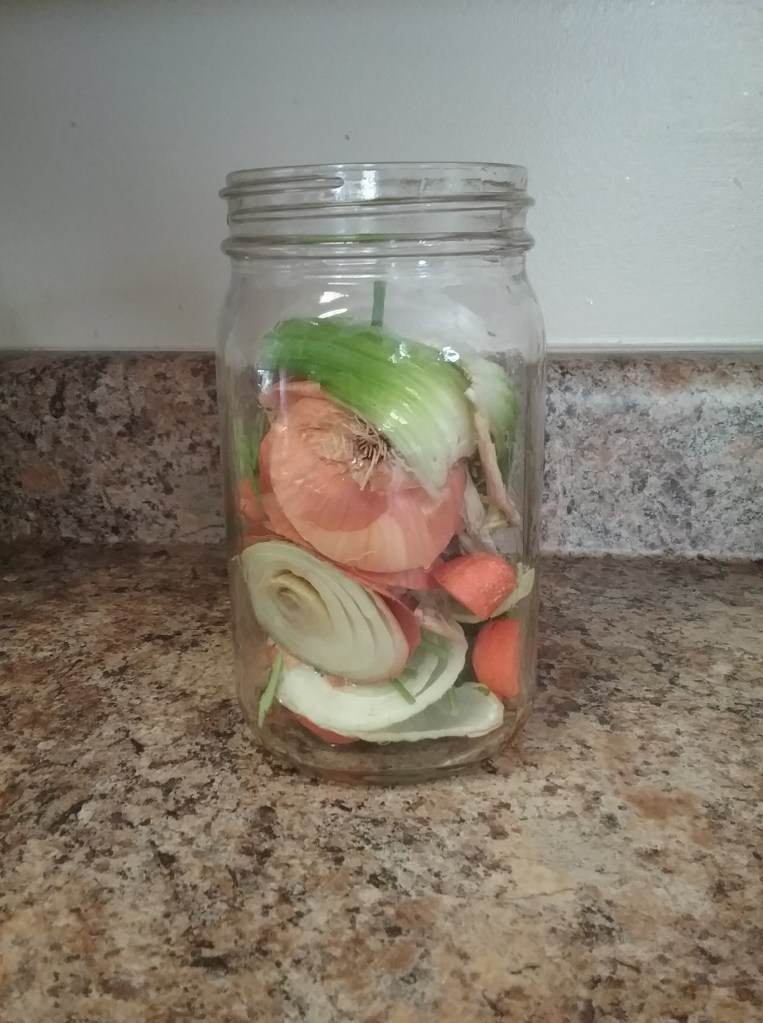
Well, now that I got your attention, I will now disappoint you with information on soup stock. One ingredient I love having around is vegetable and chicken stock. I have no way of composting anything at this time and I wondered if there was anyway to use the ends of the four vegetables I am constantly chopping up: Onions, Carrots, Celery, and Parsley. Then it occurred to me that I could always have fresh stock on hands. So this is what I do:

I keep an mason jar in my refrigerator and when I go to chop vegetables, I take it out and in goes the ends of the four vegetables I mentioned above. One quart mason jar filled with scraps will make one quart of stock. I just put them in a pot with a quart of water, put on the lid, and simmer it slowly for about a half an hour. Then strain.

Ok, so this photo shows a bit more than a quart, probably had some extra vegetable ends that day. I also do this with chicken stock. We eat a LOT of chicken. I always have chicken carcasses around and I am also one to buy chicken backs at the market specifically to make stock. When I do chicken stock I also include the vegetable scraps for a fuller flavored stock. A chicken carcass or back along with vegetables makes about 2 quarts of stock. after I strain it, I do let it sit in the refrigerator so the fat can rise to the top and then I skim it off. Both vegetable and chicken stock freeze well. I cannot say how long they keep because I use them fairly quickly.

What about other vegetables? Well, I have tried other vegetables as well: stalks of broccoli, etc. The problem with that is that the stock flavor is inconsistent. If you are an adventurer, go for it. I tend to stick to the four vegetables listed above (and the chicken when doing chicken stock).

Well, this may not be the type of stock tip you were hoping for, but I hope it is still useful to you.

The Potato ~ Tomato Adventure

Tomato Farmer, 2021, Artist Book

For three years I worked on a small commercial farm in North Carolina. The main thing we farmed in the summer were tomatoes. I do not recall how many rows we planted but the rows were between 50 to 100 yards long. Let’s put it this way, there were more than one row! In addition, I enjoyed helping a friend of mine tend to his tomato ‘garden’ which consisted of about 350 plants. Spending all that time crawling through rows of leafy vines and dense mulch, I got a good idea what it must feel like to be an earthworm. Since most of my Artist Books are about things and concerns that are important to me, I wanted to make a book about crawling through the rows of tomatoes. But whenever I tried to image what the structure would be, I fell short. Still, the idea to make this book never left me.

Last year, I was making lots of books and came across a structure called a Tunnel Book. The big Ah-Ha moment soon followed. Now I had the right structure for this tomato book but I was neck deep in other book projects so I just filed the tunnel format away in my mind until the right time came.

What Did We Learn from the Potato Famine?, 2021, Artist Book

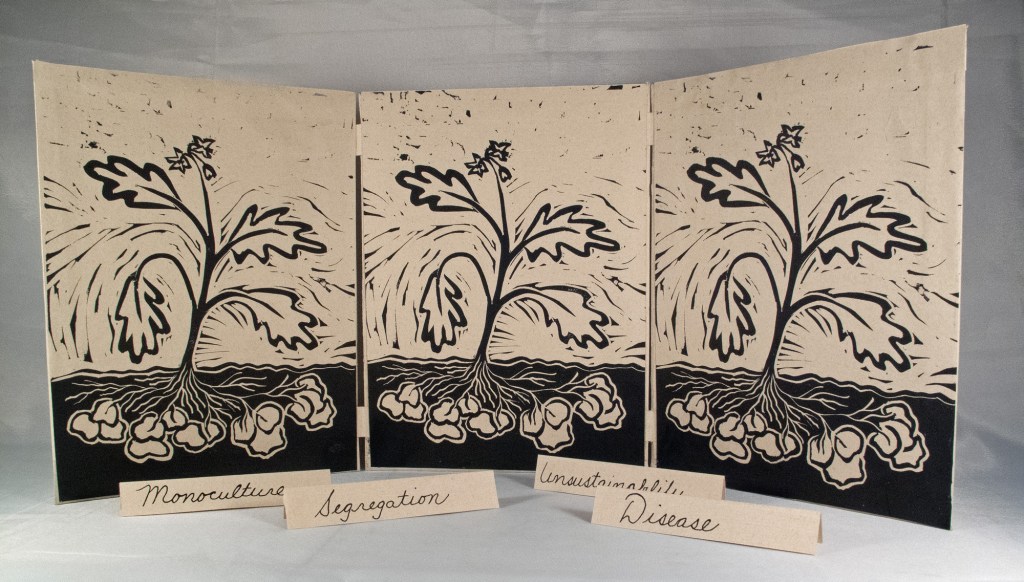
A good portion of the books I made last year addressed the topic of multiculturalism. I was working on, what I believe to be, the final book of this series called What Did We Learn from the Potato Famine? The book uses agricultural monocultures as a metaphor for the hazards of living in a homogenous society.

After I cut the linoleum block that was used for the potato plant, I remembered that potatoes and tomatoes are both nightshades, the plant family Solanaceae (See a post I wrote on this topic here). So, taking some artistic liberty, I decided it was perfectly fine to use the top part of my potato plant print for the tomato book.

You can get different views of these book, since they are three dimensional, on my website.

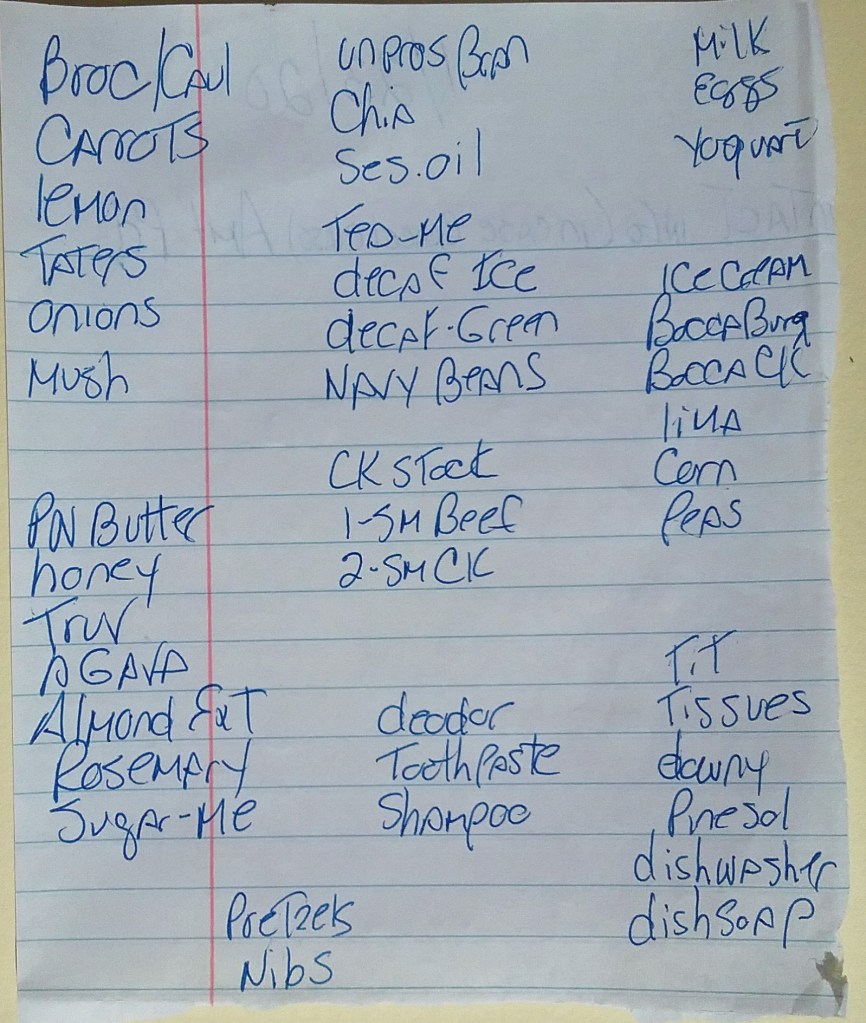
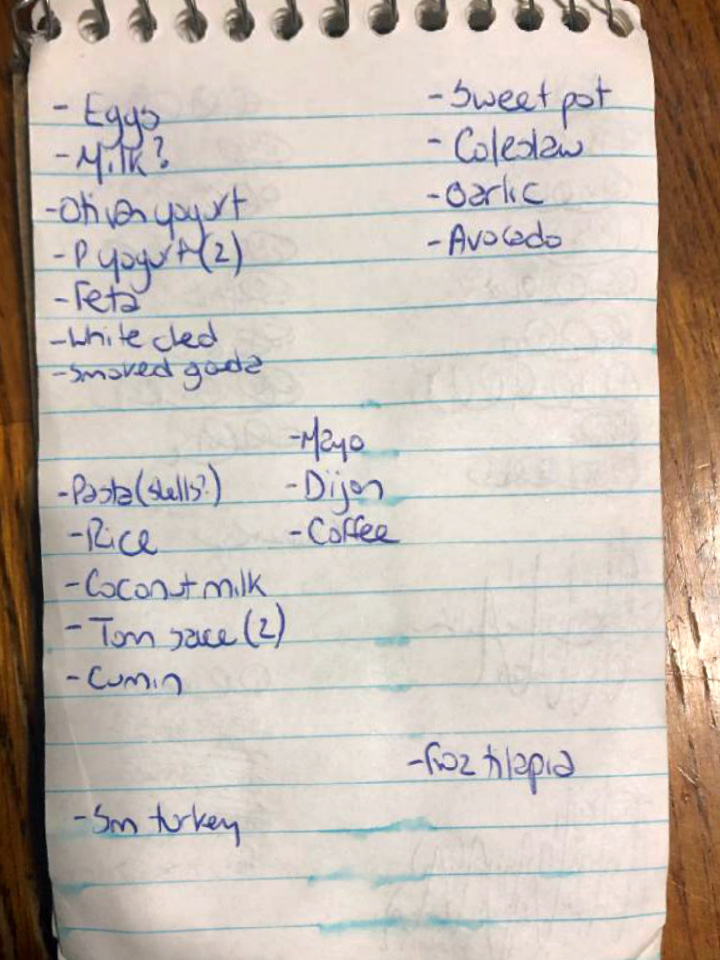
The Grocery List Project: Week 8

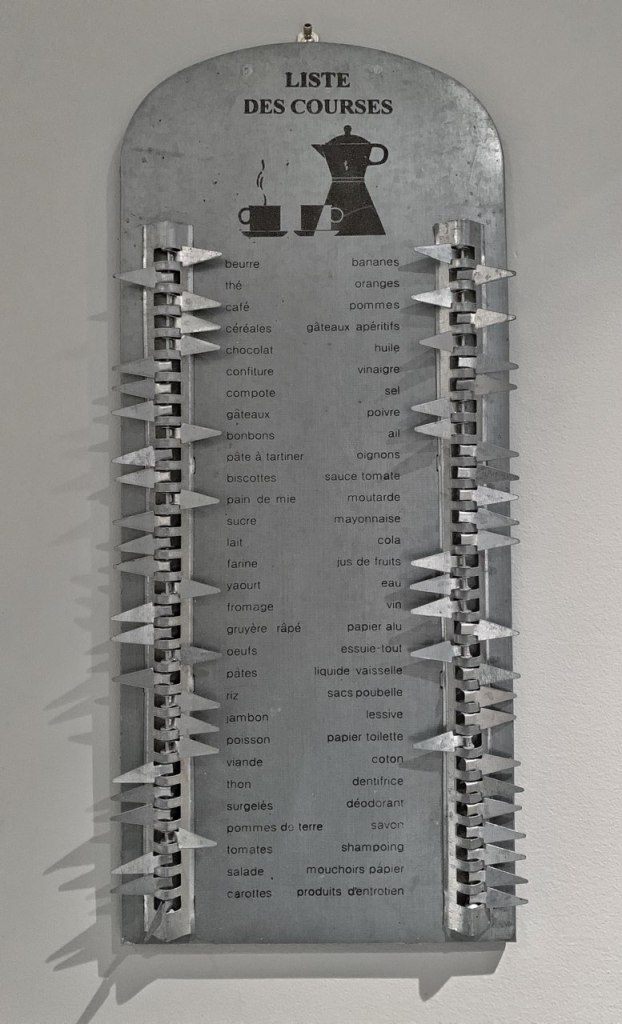
To learn about this project, click here. This post is organized this way – the grocery lists, information & facts on food insecurity, resources, and anonymous general information about the people who submitted the lists published. Looking for ways to help out? Check with you local school district or houses of worship to see if they sponsor backpack or grocery bag programs. Check online for organizations such as food pantries, food banks, and soup kitchens that collect food in your area. A list of such organization is being compiled below and will be added to each week.

Helpful Hints when Donating to a Food Program:

*Community Food drives are a great way to help. Youth organizations, companies, and houses of worship often sponsor them as a service event and also individuals and HOAs collect from neighbors to deliver to local food pantries and soup kitchens.
*Don’t forget the furry friends! Many food panty and food banks also accept pet food.
*If you garden at home or with a group, consider sharing some of your crops with the local food pantry or soup kitchen.
*Remember that hamburger helper does not help if there is no meat. When donating peanut butter, also consider crackers or bread to go with it.
*Consider donating some pantry staples such as cooking oil, which is needed for a great deal of food preparation, as well as items like sugar, flour, spices, coffee & tea.
*In addition to food, items such as personal grooming products are also needed as well as things like dishwashing detergent. Make sure to donate full size items unless there is a particular reason the organization is looking for “hotel” or “sample” size items. It you are not sure, it is always ok to ask exactly what is needed.
*Food Banks are able to buy in bulk for very good prices so donations of money are always very useful, maybe even more useful than actual food. However, Food Pantries benefit from both actual food items and money. The difference between Food Banks and Food Pantries are as follows: Food Banks feed lots of people from a wide area, either directly or by supplying to soup kitchens and other community food programs. Food Pantries are locally based and address individuals’ needs in the immediate surrounding community. They are often located in churches, or social service agencies as part of larger missions. It is a good idea to check with your local Food Bank/Pantry to see what is most useful to them.
*When donating to backpack programs, choose canned items with pop off or peel off lids in case the recipient does not have or cannot use a can opener.
*When donating macaroni & cheese try to get the kind that is premixed so that no additional ingredients like milk, which may not be available, are needed.

Food Relief Programs:

Feeding America (National program)
National Council on Aging Food Assistance Programs (National program)
Friends of Forgotten Children (New Hampshire)
Brookings County Food Pantry & other resources ( Eastern South Dakota)
Virginia Peninsula Food Bank (S.E. Virginia)
Cherry Hill Food Pantry (Camden County, New Jersey)
Jenkintown Food Cupboard (Montgomery County, Pennsylvania)
Beach Haven Food Pantries (Mid New Jersey Shore Area)
Harry Chapin Food Bank (Southwest Florida)
New Life Food Cupboard (Montgomery County, Pennsylvania)
Media Food Bank (Delaware County, Pennsylvania)
Cape May Community Food Closet (Cape May, New Jersey)
Northern Illinois Food Bank (Northern Illinois)
Hearts and Hands Food Pantry (Huntersville/Charlotte, North Carolina)
Feeding NC (Serving parts of Mecklenburg, Rowan, and Iredell Counties, NC)
Food Pantries in the Coastville, PA area (Chester County, PA)
Cluster Outreach Center (Greater Pottstown, PA area)
Bucks County Housing Group Community Food Pantries (Langhorne/Doylestown, Bucks County, PA)
Maryland Food Bank (Maryland – statewide information)
Food Pantries for Southern Delaware
**Dialing 2-1-1 will connect a person with information on local services that provide assistance.

Info from this week’s shoppers:

One of the households this week consists of two adults and the other consists of two adults and a young child. Both contributors have radically changed the way they shopped during the pandemic, only going to the store once a week. One shopper has used curbside shopping often as well as delivery of certain items from places like Target. One of the participants has access to a military PX and stocks up on certain items when they go there, which is perhaps once a month. Both participants really enjoy cooking. Both participants have mentioned community food drives either sponsored by a neighborhood or service organization.

Go Ahead ~ Bitch and Complain!

Lately I have talked to lots of people who have had days that they just feel, mentally, like crap and they can’t quite figure out why. I include myself in this group of people. The other thing we all have in common is beating ourselves up for feeling this way. It starts off where you are irritable, sad, or weepy and you try to figure out why. Then comes these thoughts: So many people are far worse off than I am, I should be grateful, etc. etc. etc. Well, there are people worse off than you but there are also people who are better off than you, even if the only reason they are better off is that on that particular day you feel like crap and they don’t! And what about being grateful? It is good to be grateful and I truly believe that most people are grateful. But just because you feel like shit, does not mean you are ungrateful.

So go ahead! Spend a day feeling like crap and wallowing in self pity without berating yourself for it. You will probably wake up the next day feeling better. And for that, you can be grateful.

The Grocery List Project: Week 7

To learn about this project, click here. This post is organized this way – the grocery lists, information & facts on food insecurity, resources, and anonymous general information about the people who submitted the lists published. Looking for ways to help out? Check with you local school district or houses of worship to see if they sponsor backpack or grocery bag programs. Check online for organizations such as food pantries, food banks, and soup kitchens that collect food in your area. A list of such organization is being compiled below and will be added to each week.

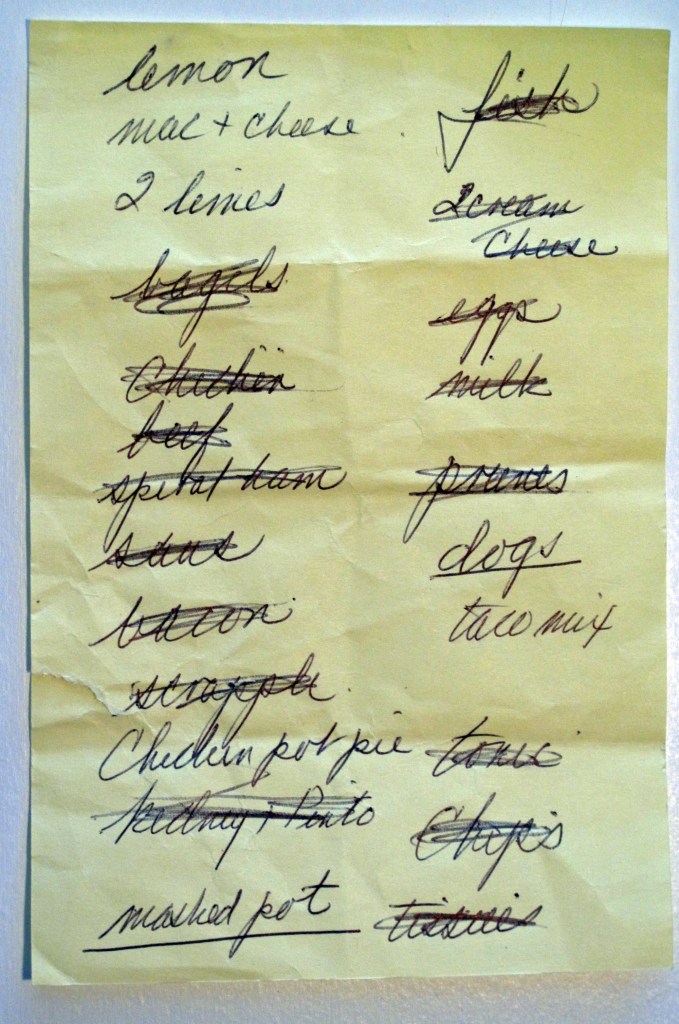
Some of the crossed out items on this week’s lists include: (TOP LIST): Tofu, bread, english muffins, granola bars, oats, walnuts, eggs, milk, orange juice, tater tots, ice cream, frozen corn, pizza dough, pork, chicken, egg noodles, cheerios, tuna fish, onion salt (BOTTOM LIST): Fish, cream cheese, eggs, milk, prunes, chips, tonic, tissues, kidney and pinto beans, bagels, chicken, beef, spiral ham, bacon, scrapple, chicken pot pie.

Helpful Hints when Donating to a Food Program:

*Don’t forget the furry friends! Many food panty and food banks also accept pet food.
*If you garden at home or with a group, consider sharing some of your crops with the local food pantry or soup kitchen.
*Remember that hamburger helper does not help if there is no meat. When donating peanut butter, also consider crackers or bread to go with it.
*Consider donating some pantry staples such as cooking oil, which is needed for a great deal of food preparation, as well as items like sugar, flour, spices, coffee & tea.
*In addition to food, items such as personal grooming products are also needed as well as things like dishwashing detergent. Make sure to donate full size items unless there is a particular reason the organization is looking for “hotel” or “sample” size items. It you are not sure, it is always ok to ask exactly what is needed.
*Food Banks are able to buy in bulk for very good prices so donations of money are always very useful, maybe even more useful than actual food. However, Food Pantries benefit from both actual food items and money. The difference between Food Banks and Food Pantries are as follows: Food Banks feed lots of people from a wide area, either directly or by supplying to soup kitchens and other community food programs. Food Pantries are locally based and address individuals’ needs in the immediate surrounding community. They are often located in churches, or social service agencies as part of larger missions. It is a good idea to check with your local Food Bank/Pantry to see what is most useful to them.
*When donating to backpack programs, choose canned items with pop off or peel off lids in case the recipient does not have or cannot use a can opener.
*When donating macaroni & cheese try to get the kind that is premixed so that no additional ingredients like milk, which may not be available, are needed.

Food Relief Programs:

Feeding America (National program)
National council on Aging Food Assistance Programs (National program)
Friends of Forgotten Children (New Hampshire)
Brookings County Food Pantry & other resources ( Eastern South Dakota)
Virginia Peninsula Food Bank (S.E. Virginia)
Cherry Hill Food Pantry (Camden County, New Jersey)
Jenkintown Food Cupboard (Montgomery County, Pennsylvania)
Beach Haven Food Pantries (Mid New Jersey Shore Area)
Harry Chapin Food Bank (Southwest Florida)
New Life Food Cupboard (Montgomery County, Pennsylvania)
Media Food Bank (Delaware County, Pennsylvania)
Cape May Community Food Closet (Cape May, New Jersey)
Northern Illinois Food Bank (Northern Illinois)
Hearts and Hands Food Pantry (Huntersville/Charlotte, North Carolina)
Feeding NC (Serving parts of Mecklenburg, Rowan, and Iredell Counties, NC)
Food Pantries in the Coastville, PA area (Chester County, PA)
Cluster Outreach Center (Greater Pottstown, PA area)
Bucks County Housing Group Community Food Pantries (Langhorne/Doylestown, Bucks County, PA)
**Dialing 2-1-1 will connect a person with information on local services that provide assistance.

Info from this week’s shoppers:

The households this week each consist of two adults. The men of both these households tend to be “meat and potato” guys. The woman of one of the households tends to lean towards vegetarianism and the other woman tends to focus more on healthy choices, but is not vegetarian. One of the participants experienced food insecurity growing up. One of the participants lives where meals are provided if desired but prefers to cook their own food. Both participants shop less frequently than they used to.